
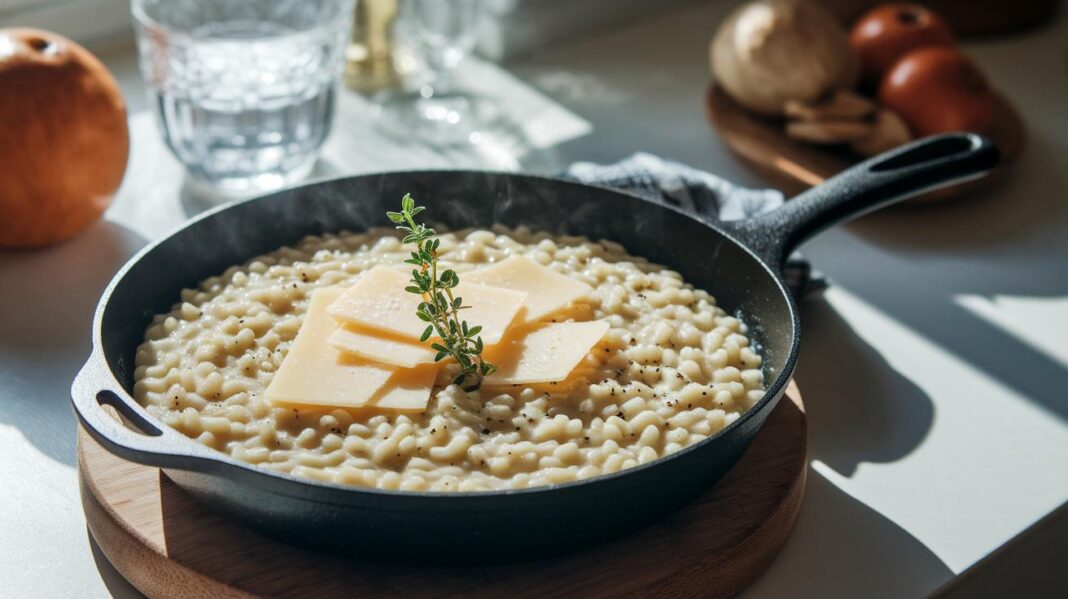

Ever wondered if you can make a rich risotto without using wine? This one-pan dish swaps wine for apple cider vinegar and a squeeze of lemon, giving it a bright, tangy kick. Arborio rice turns creamy as it cooks, while hearty mushrooms and fresh peas add texture and color. It’s a simple, quick meal that fills your kitchen with delicious aromas. Let’s turn basics into something brilliant!
Step-by-Step Recipe for One-Pot Risotto Without Wine
Ingredients:
- 1 cup Arborio rice
- 1 L (4 cups) vegetable or chicken stock (850 ml heated; reserve 150 ml with lemon juice)
- 2 tbsp extra virgin olive oil
- 2 tbsp butter (plus an extra 2 tbsp for finishing)
- 2 tbsp apple cider vinegar
- 8 oz Baby Bella mushrooms
- A handful of fresh peas
- 1/4 tsp salt (plus more to taste)
- 1/2 cup grated Parmesan cheese
- A squeeze of lemon juice
- Heat the olive oil and 2 tbsp butter in a heavy pan or Dutch oven over medium heat.
- Add the mushrooms and 1/4 tsp salt. Cook them for about 7 minutes until they start to brown.
- Stir in the Arborio rice and let it toast for 1 minute.
- Pour in the apple cider vinegar and scrape the pan to lift the tasty bits.
- Add the hot stock slowly, about 1/2 cup at a time. Stir continuously for 2 to 3 minutes until the liquid is absorbed.
- When the rice is creamy and al dente, stir in the reserved 150 ml stock mixed with lemon juice, then toss in the peas.
- Remove from heat. Mix in the extra 2 tbsp butter and the grated Parmesan. Adjust the salt if needed.
- Serve immediately while warm and creamy.
| Addition Number | Stock Amount | Stirring Time |
|---|---|---|
| 1 | 4 oz (1/2 cup) | 2-3 minutes |
| 2 | 4 oz (1/2 cup) | 2-3 minutes |
| 3 | 4 oz (1/2 cup) | 2-3 minutes |
| 4 | 4 oz (1/2 cup) | 2-3 minutes |
| 5 | 4 oz (1/2 cup) | 2-3 minutes |
Selecting Rice and Stock for Creamy One-Pot Risotto Without Wine

Arborio rice is the best choice for a rich, creamy risotto. Its high starch gives the dish a smooth, velvety feel as it cooks. Other short-grain rice options work too, but they usually stay firmer and don't get as creamy. Stick to a 1 cup rice to 4 cups stock ratio so the rice slowly releases its starch.
Both vegetable and chicken stock work well in this dish. Vegetable stock offers a light flavor for a vegetarian meal, while chicken stock brings a deeper taste for non-vegetarian versions. Using a total of 5 cups of stock can help if you plan to store leftovers, since the rice will keep absorbing liquid. I always warm the stock first to ensure the rice cooks evenly and stays smooth.
- 1 cup rice mixed with 4 cups stock gives a perfect creamy texture.
- Short-grain alternatives make a firmer bite.
- Vegetable stock gives a lighter taste, and chicken stock adds richness.
- Warm stock helps the rice cook evenly.
Stir steadily as you cook to bring out the rice’s natural creaminess and create a comforting, flavorful one-pot meal.
Alcohol-Free Deglazing Methods for One-Pot Risotto
After you sauté your mushrooms, add 2 tbsp apple cider vinegar to the pan. This helps lift the flavorful brown bits stuck at the bottom. Quickly stir in 150 ml of warm stock with a squeeze of lemon juice to balance the flavors. Add the lemon-infused stock toward the end so it brightens your risotto without making it too tangy.
Helpful deglazing tips:
- Use 1 tbsp vinegar and extra stock if you prefer a softer tang.
- If the mix tastes too acidic, stir in a small knob of butter or a pinch of salt.
- Try white wine vinegar or a dash of lime juice for a slight twist in flavor.
| Method Variation | Flavor Impact |
|---|---|
| Apple cider vinegar (2 tbsp) | Bright tang that lifts brown bits |
| Lemon-infused stock (150 ml) | Adds brightness without overpowering |
| White wine vinegar | Softer, gentler acidity |
Always taste and adjust your seasoning as you finish cooking.
Tips for Achieving a Lusciously Creamy One-Pot Risotto Without Wine

The main recipe guides you through heating 2 tbsp olive oil with butter to gently toast the rice. Then, off the heat, you stir in another 2 tbsp butter and Parmesan to create a smooth, creamy finish.
Additional Tips and Variations
-
Add fats at the right time.
Start by heating 2 tbsp olive oil with butter. This base helps the rice slowly release its starch. -
Try a dairy-free version.
Omit the Parmesan and use a bit more salt for extra flavor. -
Use warm stock.
Add 5 cups of warm stock gradually. This method helps build a rich, silky texture. -
Perfect fat timing.
Stir in extra butter and Parmesan after you take the pot off the heat to lock in the creaminess without overcooking the cheese.
Variations and Make-Ahead One-Pot Risotto Without Wine
You can easily make this one-pot risotto by cooking a larger batch and saving leftovers in an airtight container in the fridge for up to 3 days. Keep in mind that the rice will absorb extra liquid over time, which might leave it thicker. Sticking to the 1 cup rice to 4 cups stock ratio helps it stay creamy even after storage.
To reheat, move the risotto to a pan over low to medium heat. Slowly stir in 1 warmed cup of stock until the mix loosens up to your liking. Keep stirring so the stock blends in evenly and the risotto regains its smooth, creamy texture.
For a quick dinner that fits a busy schedule, try adding:
- Fresh herbs like parsley or basil for a burst of flavor.
- Cooked chicken or shrimp for extra protein.
- Roasted vegetables like bell peppers or zucchini for added texture and taste.
These mix-ins not only round out the meal but also give you flexibility with a single-pan solution. Experiment with your favorite ingredients to keep the dish exciting and enjoy the convenience of a make-ahead dinner.
Flavor-Packed Additions for an Elevated One-Pot Risotto Without Wine
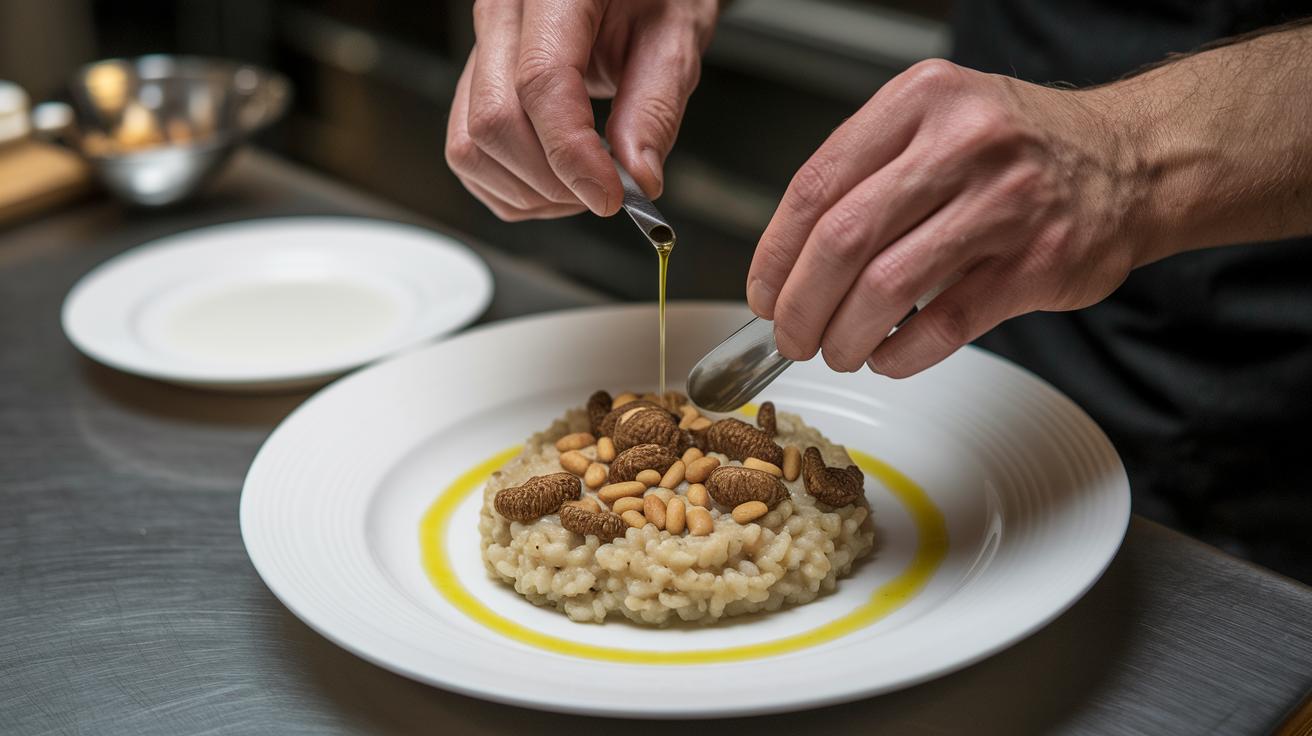
Give your risotto a gourmet upgrade by using wild porcini mushrooms instead of the usual kind. Sauté 8 oz of wild porcini mushrooms with ¼ tsp of smoked salt in a mix of oil and butter for 7 minutes until they start to get a deeper flavor. When you plate the dish, add a quick drizzle of lemon-infused olive oil to brighten it up while keeping that creamy feel.
For a fun crunch, toast ¼ cup of pine nuts in a dry pan until they turn golden. Sprinkle them over your risotto right before serving. You can also try crisping up some pancetta if you prefer a savory, meaty bite.
Finish the dish by stirring in a dash of grated Parmigiano Reggiano. This simple step adds a rich, savory touch that deepens the overall flavor without overdoing it.
Troubleshooting and Common Pitfalls in No-Wine One-Pot Risotto
Keep stirring while you cook. This simple trick helps the rice release its natural starch for a creamier dish. Use medium heat so the pot stays at a gentle simmer. This helps the rice cook evenly without sticking or burning at the bottom. If the risotto starts to dry out too fast, stir in a little more warm stock. If it seems too watery, let it cook for a few extra minutes until it thickens nicely.
Here are common problems and how to fix them:
- Undercooked rice: Let it cook a bit longer and add a small amount of warm stock.
- Scorched bottom: Lower the heat and stir often to prevent any burnt bits.
- Uneven creaminess: Add the stock little by little and stir well to spread out the moisture and heat evenly.
Keep a close eye on the heat. Small adjustments during cooking help you achieve a perfectly balanced, creamy risotto every time.
Nutritional Profiles and Dietary Tweaks for One-Pot Risotto Without Wine
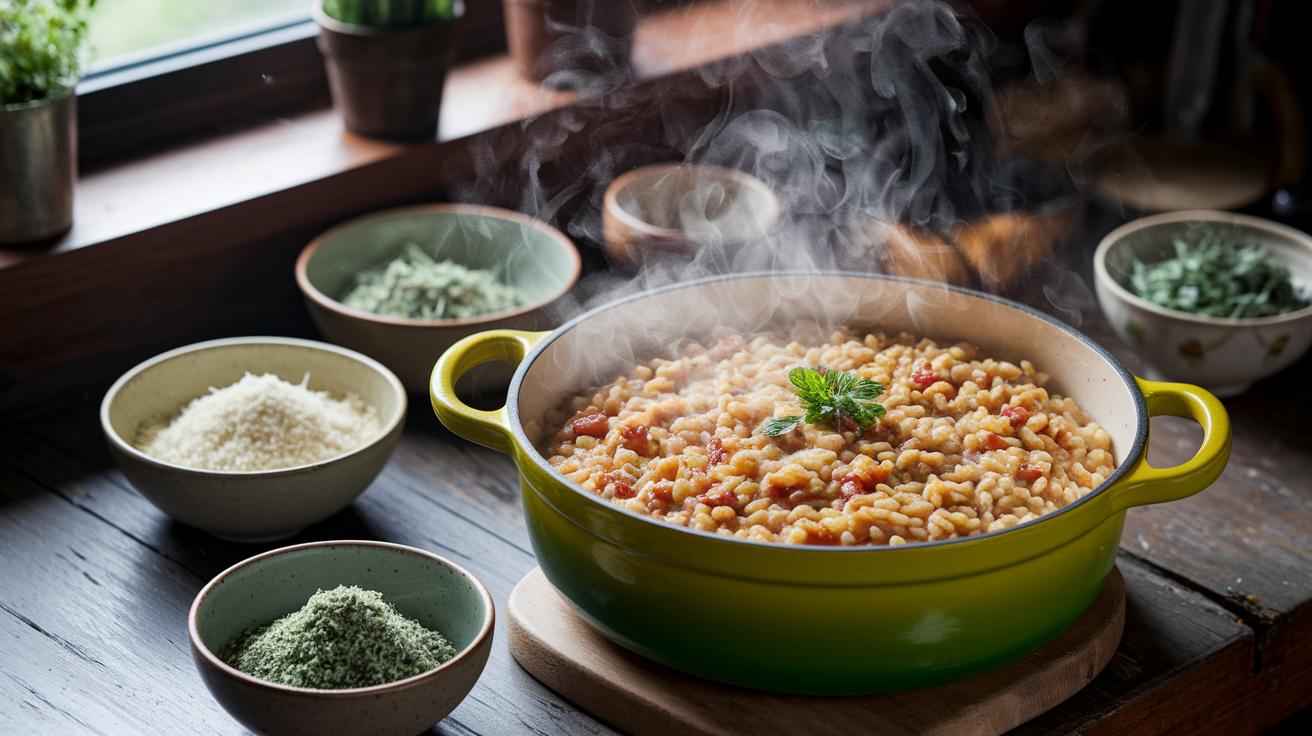
This one-pot risotto is a hearty meal that fits families and avoids alcohol. It centers on rice, which provides plenty of carbs and is naturally gluten-free. If you use chicken stock, you also add a good boost of protein. The nutrient values can change, too, based on the stock and cheese you pick. For example, chicken stock ups the protein, while dairy-free ingredients lower calories and fat.
You can easily adjust the recipe to fit different diets. If you want a vegan version, simply leave out the butter and cheese. This change makes the dish lighter with fewer calories and less fat. A dairy-free option might call for extra salt to keep the flavor bright, and the rice still offers nourishing starch to help fuel your day.
Here are some simple tweaks:
- Vegan: Skip the butter and Parmesan.
- Gluten-Free: Keep using short-grain rice since it’s naturally gluten-free.
- Protein Boost: Use chicken stock instead of vegetable stock.
- Fewer Calories: Choose dairy-free options for a lighter dish.
Adjusting the ingredients lets you tailor the risotto to different dietary needs without losing its creamy charm.
Final Words
In the action, we shared a complete guide with a clear ingredient list, numbered steps, and practical tips. We broke down rice and stock choices, explained deglazing with apple cider vinegar, and highlighted finishing touches with butter and Parmesan. Helpful troubleshooting hints and smart storage ideas add extra value. Enjoy this stress-free approach to crafting a tasty dish that fits busy nights. May each bite of your one-pot risotto without wine bring a smile and a sense of kitchen success.
FAQ
What does mushroom risotto without wine (BBC Good Food style) involve?
Mushroom risotto without wine, as seen in BBC Good Food recipes, uses substitutes like apple cider vinegar and lemon-infused stock to bring acidity and balance, letting the mushroom flavor and creaminess shine.
How can I make a vegetarian risotto without wine?
A vegetarian risotto without wine relies on hearty vegetables and a well-seasoned stock, using vinegar to brighten the dish and maintain the creamy texture typical of traditional risotto.
How do I prepare risotto without wine and cheese?
Risotto without wine and cheese is prepared by skipping the traditional wine and dairy, instead using acidic elements like apple cider vinegar and well-flavored stock to achieve a balanced, rich dish.
How does one make chicken and mushroom risotto without wine?
Chicken and mushroom risotto without wine is made by replacing wine with a splash of apple cider vinegar and lemon-stock mix, ensuring the chicken and mushrooms develop deep, savory flavors without losing creaminess.
What is a simple method for mushroom risotto without wine?
A simple mushroom risotto without wine starts with sautéed mushrooms and aromatics, then gradually adds warm stock with a hint of apple cider vinegar to keep the flavor bright and the texture luxuriously creamy.
Can you make risotto without wine?
You can make risotto without wine by using acidic substitutes such as apple cider vinegar and a reserved lemon-plus-stock mix, which preserves the dish’s brightness and creamy consistency.
How is mushroom and pea risotto without wine prepared?
Mushroom and pea risotto without wine is prepared by first sautéing mushrooms for a savory base, then adding peas near the end, and deglazing with a touch of apple cider vinegar to create a vibrant, balanced dish.