
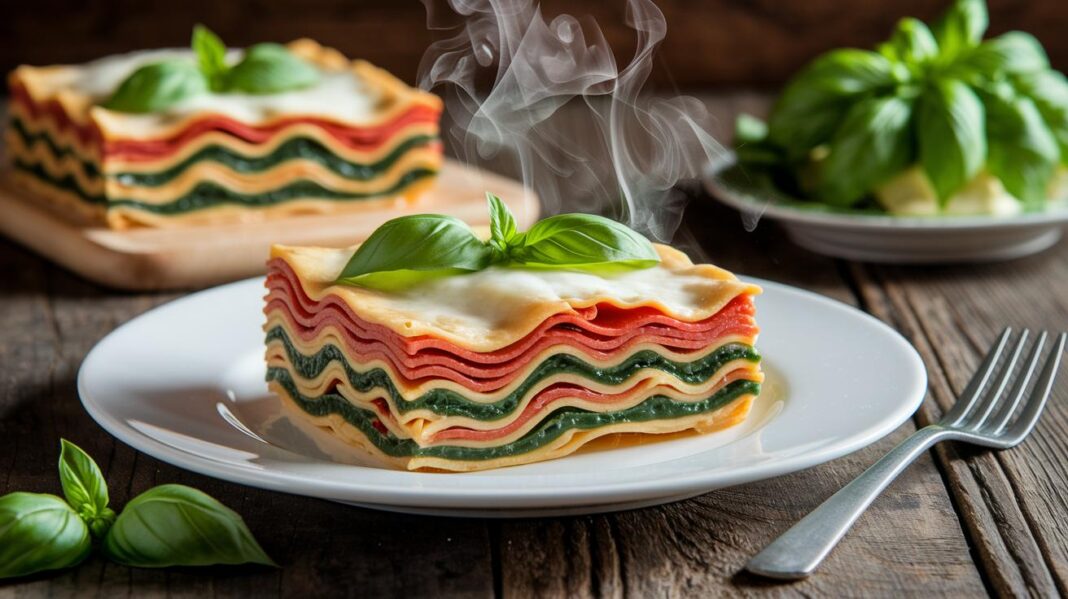

Ever thought a veggie version could pack the same hearty punch as classic Italian lasagna? Our recipe features firm noodles, three kinds of cheese, and a thick tomato sauce loaded with zucchini and spinach. Each layer bursts with comforting Italian flavors, showing that meatless can be just as satisfying. Get ready for a light, flavorful dish that celebrates the vibrancy of Italy in every bite.
Complete Vegetarian Italian Lasagna Recipe At A Glance
This no-meat lasagna uses baked pasta sheets layered with three cheeses, ricotta, mozzarella, and Parmesan, plus a bubbling tomato sauce. Start by heating 2 tablespoons of olive oil in a pan. Then stir in 4 cups (32 oz) of sauce to build a rich and comforting base.
It also includes garden vegetables like roasted red bell peppers, zucchini, onions, mushrooms, and baby spinach. Each veggie adds a burst of flavor and a mix of textures, so the dish feels both hearty and satisfying. The whole wheat noodles are cooked until very firm (al dente), then arranged in a 9×13-inch baking dish to soak up the oven’s heat.
As you build your lasagna, layer noodles, the creamy cheese blend, and the savory vegetable sauce. Bake the dish at 375°F until the cheese becomes bubbly and golden. If you’re after a dairy-free option, you can whip up a vegan "ricotta" by blending tofu with miso and nutritional yeast. And if you need a gluten-free version, try no-boil gluten-free noodles (note that they tend to be a bit shorter). This way, everyone can enjoy this classic Italian favorite.
Ingredient List For Your Vegetarian Italian Lasagna
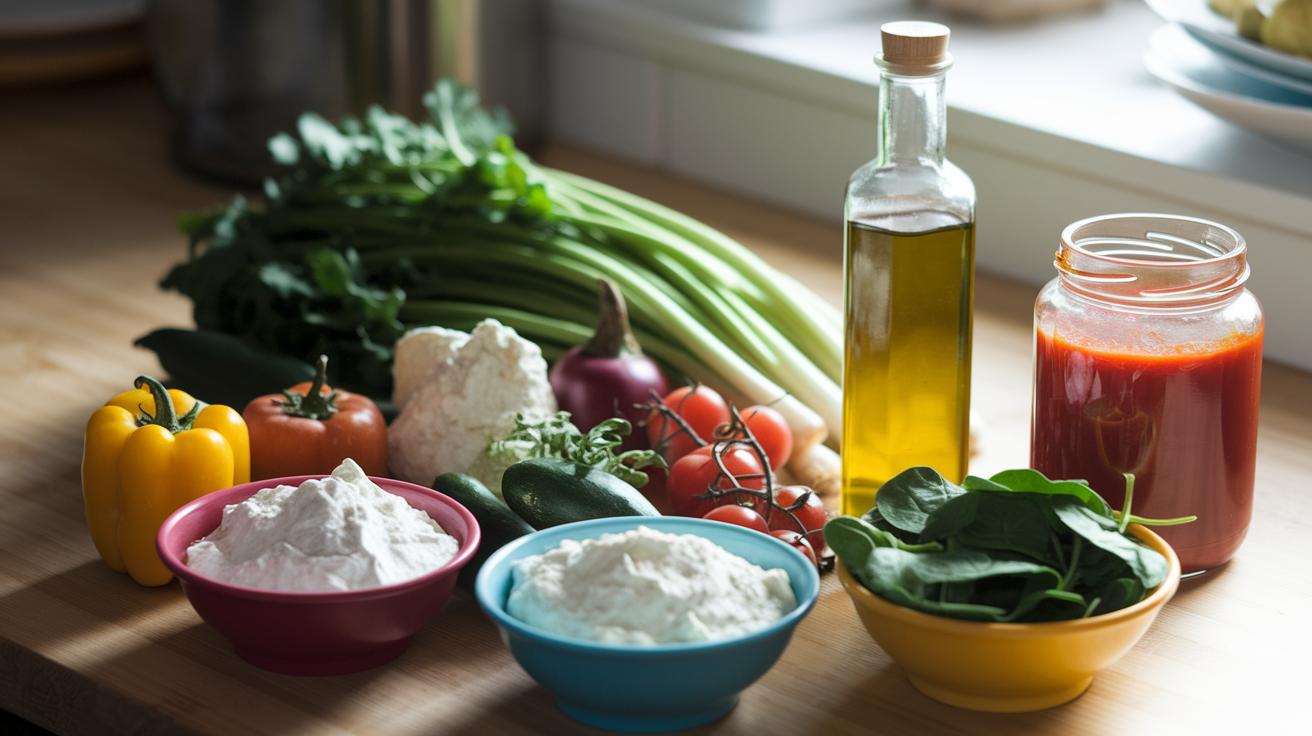
This vegetarian lasagna is a layered bake filled with fresh garden vegetables and a smooth blend of ricotta and spinach. It bursts with the flavors of tomato and basil for a taste of Italy.
- 2 tablespoons olive oil
- 4 cups (32 oz) Italian tomato sauce
- 1 medium onion, diced
- 1 red bell pepper, diced
- 3 cloves garlic, minced
- 1 teaspoon Italian seasoning
- 9 lasagna noodles (choose whole wheat or no-boil gluten-free)
- 3 cups whole milk ricotta cheese
- 24 oz shredded mozzarella cheese
- ½ cup grated Parmesan
- 1 medium zucchini, thinly sliced
- 8 oz mushrooms, sliced
- 2 cups baby spinach
Each ingredient plays its part to build layers of flavor and texture. The olive oil helps release the aroma of the vegetables, while the tomato sauce gives the dish an authentic Italian taste. The combination of ricotta, mozzarella, and Parmesan creates a creamy, smooth texture that ties everything together. The fresh vegetables add a burst of color and a light crunch. Gather these items, measure carefully, and set up your workspace for a fun, stress-free cooking experience.
How To Assemble And Bake The Vegetarian Italian Lasagna
-
Preheat your oven to 375°F. If you use no‑boil or fully cooked noodles, set the oven to 400°F instead. This helps the lasagna bake evenly.
-
Warm 2 tablespoons of olive oil in a large pan over medium heat. Add the chopped onion, diced red bell pepper, and 1 teaspoon of Italian seasoning. Cook for about 8 minutes until the onion is soft and the bell pepper is tender.
-
Stir in 3 minced garlic cloves and cook for 1 minute. Pour in 4 cups (32 oz) of Italian tomato sauce, then let it simmer for 10 to 15 minutes. Near the end, stir in 2 cups of baby spinach for a fresh, colorful boost.
-
Spread 1 cup of the sauce evenly in a 9×13-inch baking dish. Lay out 3 lasagna noodles (choose whole wheat or no‑boil gluten‑free as you like) so they overlap neatly.
-
Dollop one‑third of the 3 cups whole milk ricotta cheese over the noodles. Use the back of a spoon to spread it gently into an even layer.
-
Spoon some sauce over the ricotta, then sprinkle one‑third of 24 oz of shredded mozzarella, ½ cup of grated Parmesan, and half of the sautéed vegetables on top. This layering makes every bite rich in flavor.
-
Repeat the layering two more times, ending with a final layer of sauce and the rest of the cheese. Cover the dish with foil and bake for 30 minutes.
-
Remove the foil and bake for an extra 10 minutes until the cheese is golden and bubbly.
-
Let the lasagna rest for 10 minutes before cutting. If you started with lasagna from the fridge, add about 15 extra minutes to the covered baking time.
Customizing Your Vegetarian Italian Lasagna With Vegan And Gluten-Free Variations
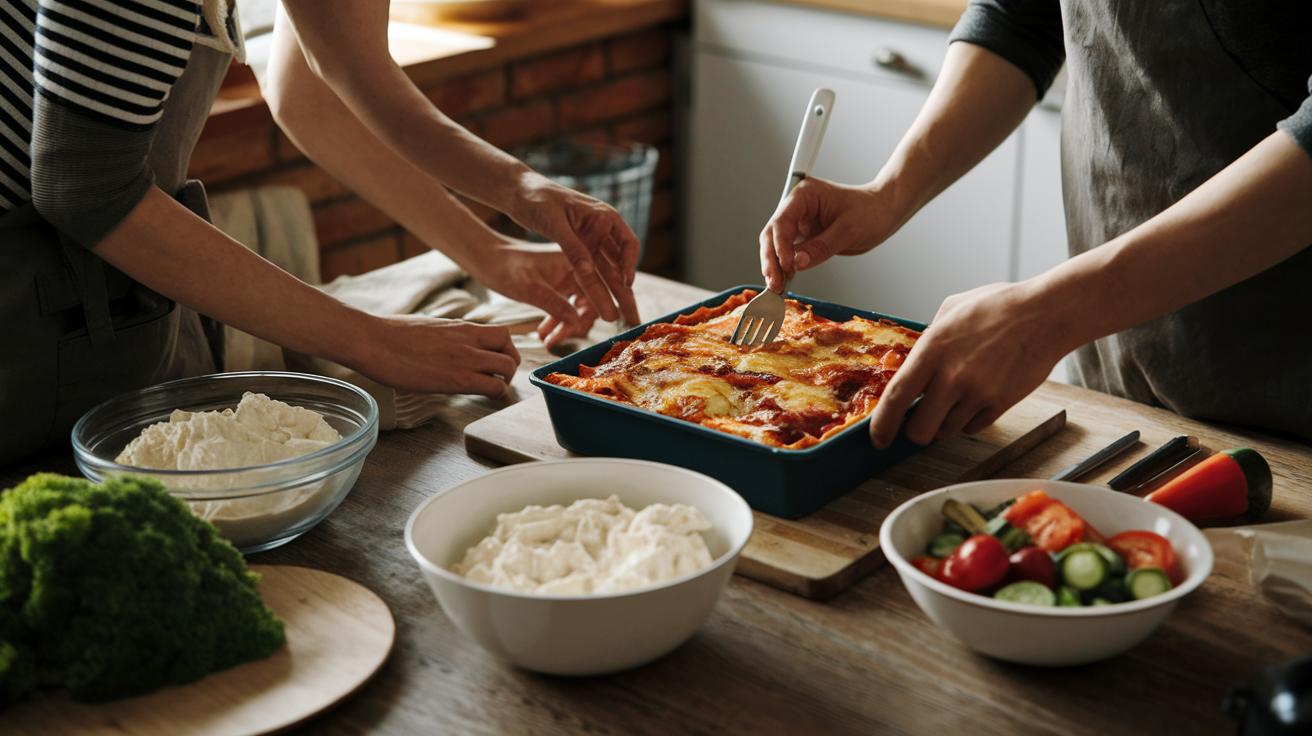
If you want a vegan version, replace whole milk ricotta and shredded mozzarella with a homemade tofu, miso, and nutritional yeast ricotta. Use your favorite dairy-free cheese and leave out the Parmesan. Once you assemble the lasagna, cover it and bake at 400 F for 30 to 50 minutes until it is warm and bubbly.
For a gluten-free option, swap regular lasagna noodles with no‑boil gluten‑free noodles. Use about ¾ of a 1-pound box since these noodles are shorter. Just layer them as you normally would; nothing extra is needed to get that hearty texture.
You can boost the flavor and texture by adding extra layers of roasted eggplant and more zucchini slices between the cheese layers. Stir in 1 cup of cooked green or red lentils into your sauce for a rustic flavor boost and extra plant-based protein.
- Vegan twist: Use tofu-miso-nutritional yeast “ricotta” instead of dairy cheeses and skip the Parmesan.
- Gluten-free option: Use no‑boil gluten‑free noodles from about ¾ lb of a 1-pound box.
- Hearty texture: Layer additional roasted eggplant and zucchini slices.
- Protein boost: Stir 1 cup of cooked lentils into the sauce.
Make-Ahead Strategies And Cooking Tips For Vegetarian Italian Lasagna
Make your tomato sauce 1–2 days ahead and keep it in the fridge. This trick saves you time when you start assembling your lasagna. I often prepare the sauce the day before, and it mixes beautifully with the other layers later.
You can put your lasagna together up to 24 hours before you plan to bake it. If it comes out of the fridge cold, simply add about 15 extra minutes to the baking time while keeping it covered with foil. This helps the flavors blend even better.
For tasty leftovers, store them in an airtight container for up to 4 days. When you're ready to enjoy them again, heat in the microwave or in a 350°F oven until warmed through.
A helpful tip to avoid soggy layers: cook all your vegetables until they're soft before layering them in the dish. This step gives your lasagna a satisfying texture with tender, slow-cooked seasonal veggies.
- Make the sauce ahead (store in the fridge 1–2 days).
- Assemble up to 24 hours in advance; add 15 minutes when baking from cold.
- Keep leftovers in an airtight container for 4 days.
- Cook vegetables until tender for the best texture.
Serving And Pairing Ideas For Vegetarian Italian Lasagna
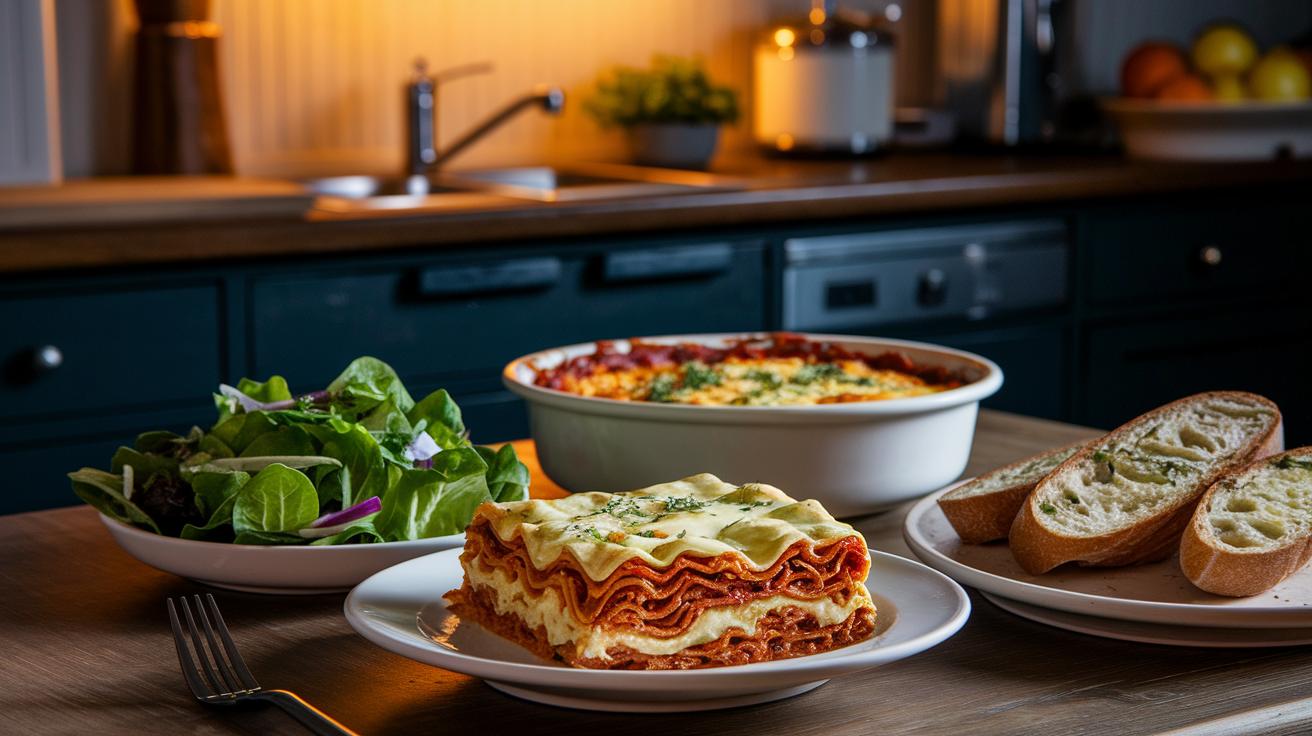
Pair your lasagna with a fresh green salad tossed in a light vinaigrette. Use romaine or mixed baby greens to add a tangy crunch that cuts through the rich, cheesy layers. For a burst of summer flavor, mix in sliced cherry tomatoes and cucumbers.
Serve warm, crusty bread like garlic bread, focaccia, or garlic knots on the side. They are great for soaking up the creamy sauce and add a hearty feel to the meal.
Another tasty option is a simple summer vegetable gratin with lightly roasted zucchini and tomatoes. This adds a pop of color and extra texture to your plate.
Finish each serving with a few fresh basil leaves and a sprinkle of grated Parmesan to boost the Italian flavors. If you’re in the mood for a twist, try serving your lasagna alongside a classic spaghetti bolognese for a fun contrast between vegetarian and meaty options.
Final Words
In the action, you learned how to create a comforting vegetarian Italian lasagna recipe that delights with perfect layers of cheese, vibrant vegetables, and a robust tomato sauce. The recipe offers plenty of room for personal touches, from vegan or gluten-free swaps to make-ahead tips that save you time on busy nights.
This guide breaks the process into clear, manageable steps so you can enjoy a stress-free cooking experience. Keep experimenting and enjoy every tasty bite with family and friends.