
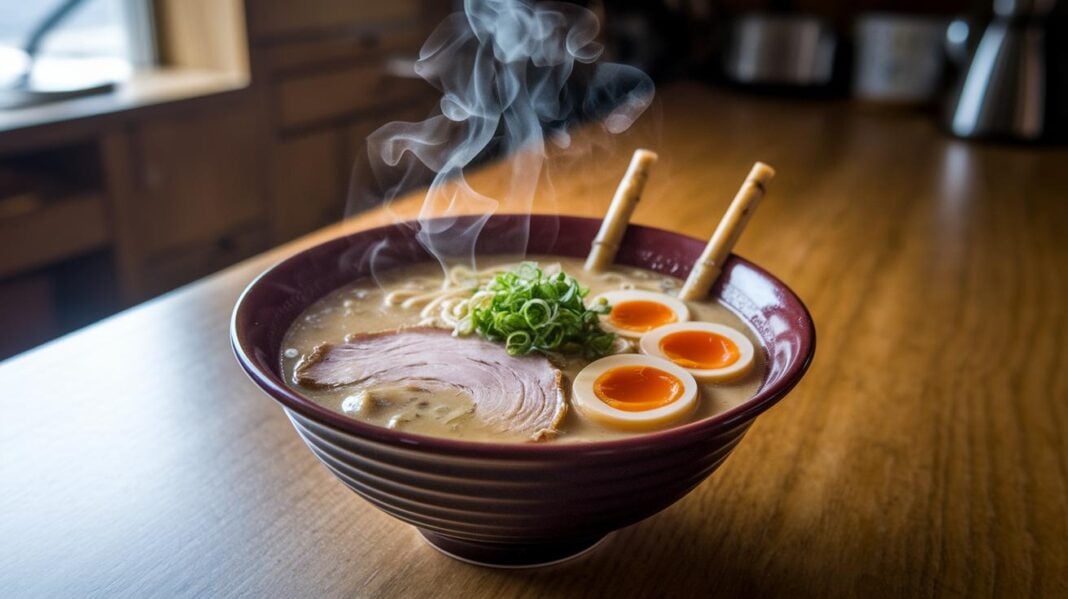

Have you ever dreamed of making restaurant-style tonkotsu ramen at home? This recipe blends rich pig trotters, tender pork belly, and a broth that simmers for hours to bring warmth and comfort in every bowl. You’ll follow a simple guide from blanching the bones to making fresh alkaline noodles and a flavorful tare. I tested every step so you can enjoy a delicious, hearty bowl in your own kitchen. Ready to fill your plate and your heart?
Quick-Start Guide: Tonkotsu Ramen at a Glance
- Gather your proteins: 5 lb pig trotters, 3 lb pork belly (chashu), and 2 chicken wings.
- Blanch the bones for a short time. Then, simmer them in water for 12–18 hours. Skim off any foam as you go to keep your broth clean.
- Make the tare by mixing 1 cup kombu/bonito dashi with 1/3 cup soy sauce in a small pot.
- Prepare your fresh alkaline ramen noodles by treating them with 2 tsp baked-soda solution. Boil the noodles in rapidly simmering water for up to 40 sec, then rinse them quickly under hot water to wash off extra starch.
- To serve, warm your bowl first. Add 1–2 Tbsp of tare and ladle in the rich broth. Top with the noodles, slices of chashu pork, a soft-boiled egg, a drizzle of garlic oil, and any garnishes you love.
Essential Ingredients for Authentic Tonkotsu Ramen
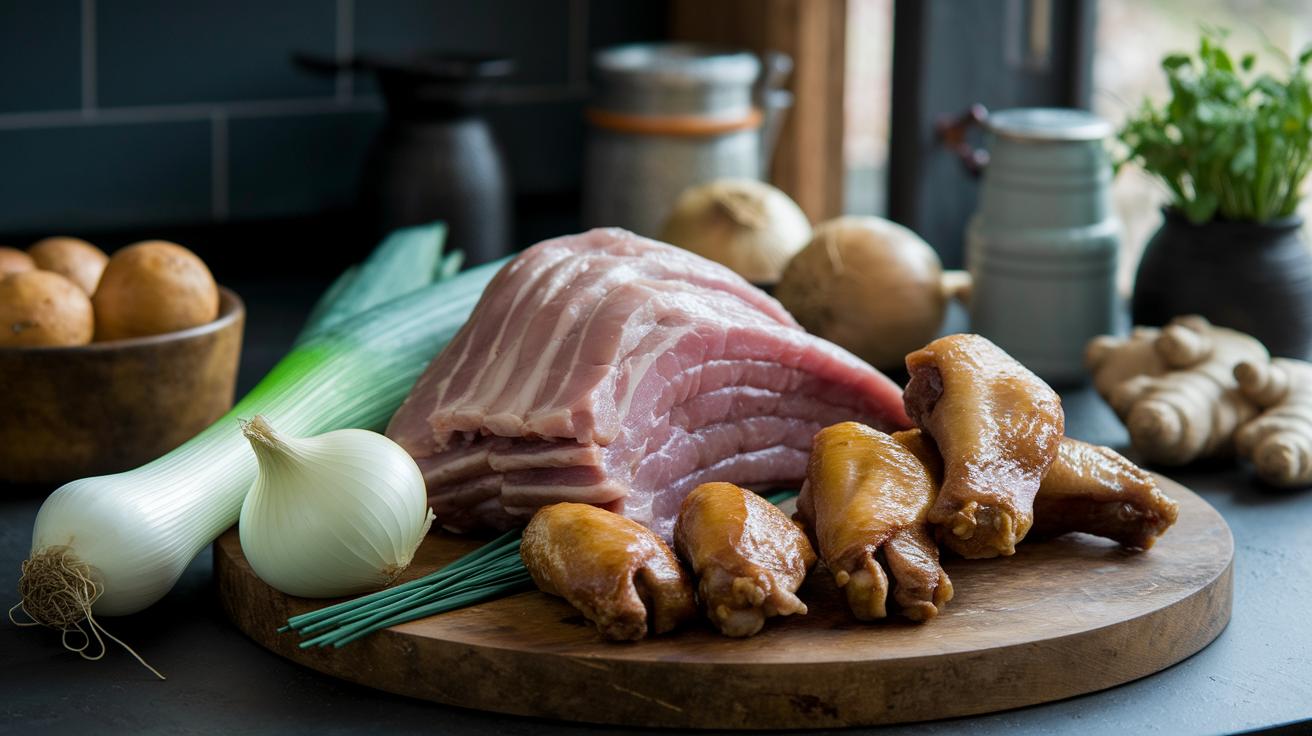
This checklist helps you gather everything you need for a rich, homemade bone stock and a bowl of satisfying tonkotsu ramen.
• Start with the meats: 5 lb pig trotters for a gelatin-rich base, 3 lb pork belly (chashu) for tender, flavorful meat, and 2 chicken wings to add extra umami to the broth.
• Next, grab your aromatics. Use one leek, sliced to bring out its sweet layers; one onion, cut into 8 pieces; a knob of ginger, peeled and sliced; plus the white parts of a few chives for a light zing. Save the green parts for a pretty garnish later.
• For a boost of natural flavor and minerals, soak dried kombu in water for 24 hours before using it in your broth. And remember, ramen noodles need a quick bath in alkaline water to keep their classic, bouncy texture.
• Finally, prepare the tare that ties everything together. Mix 1 cup of dashi broth made from bonito flakes with ⅓ cup soy sauce. If you like a bit of crunch, you can also add some menma (bamboo shoots) from your local Asian market to the final bowl.
Mastering the Pork Bone Broth for Tonkotsu Ramen
Place your pork bones in a large pot and cover them with fresh water. Turn up the heat until the water boils hard and turns a cloudy color from impurities and proteins. As soon as you see foam forming, use a fine-mesh strainer or a big spoon to skim it off. This simple step helps keep your broth clean and rich.
Once the foam is gone, lower the heat to get a gentle simmer. Let the broth cook for 12 to 18 hours so the bones can give up lots of collagen and deep flavor. Adding chicken wings now is a smart move, they add extra depth and balance to your broth.
Keep an eye on the water level while it simmers. If the liquid drops too low, add water so that the bones always stay about 2 inches under the liquid. If you have kombu in the pot for extra flavor, take it out once it has done its job to avoid any slight bitterness.
Every few hours, check the broth and remove any extra fat with a ladle or fat separator. This keeps the broth clear and creamy instead of greasy. Enjoy the steady, slow heat, and soon you’ll have a silky pork broth that is the heart of true tonkotsu ramen.
How to Make Tare Sauce for Tonkotsu Ramen
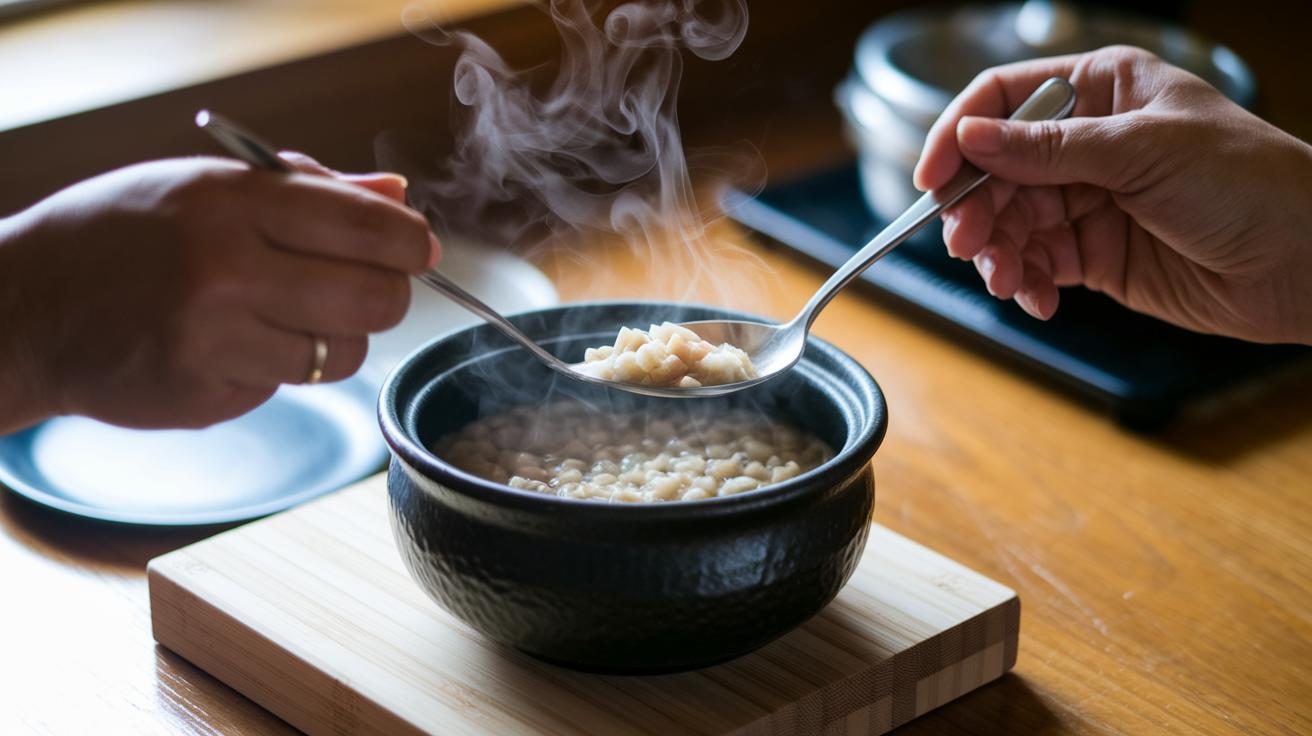
- In a small pot, mix 1 cup dashi (made from soaked kombu and bonito flakes) with 1/3 cup soy sauce. Bring the mixture to a simmer and let it cook for 5 minutes. This gentle heat brings the flavors together while keeping them bright.
- Remove the pot from the heat and strain the sauce to remove any solids. Transfer the smooth liquid to a clean container to use for seasoning your ramen bowls or marinating soft ramen eggs.
- For a flavor twist, stir in a spoonful of miso paste for extra umami or a dash of chili oil for a subtle kick. Add these slowly, tasting as you go, until it suits your taste.
Cooking and Customizing Ramen Noodles for Tonkotsu Ramen
Check out the Quick-Start Guide for the basic noodle steps like the baked-soda solution, boiling time, and rinsing. The tips below will help you make your noodles just the way you like them.
You can choose fresh alkaline noodles, grab store-bought ones, or make your own. Homemade noodles let you control thickness and texture. For example, rolling the dough very thin gives you a lighter bite. I once tried thin noodles, and they picked up the broth beautifully, adding a delicate feel to each slurp.
You can also change the noodle texture by adjusting how long they rest in the hot broth. A quick steep softens them, while a shorter rest keeps them firm. Experiment with water temperature or dough hydration to subtly change the firmness.
Helpful tips:
| Try comparing store-bought noodles with homemade ones to see which texture you prefer. |
| Adjust the dough thickness when making your own noodles to change the chew. |
| Let noodles sit in hot broth for an extra minute to soak up more flavor and alter texture. |
Preparing Classic Toppings for Tonkotsu Ramen
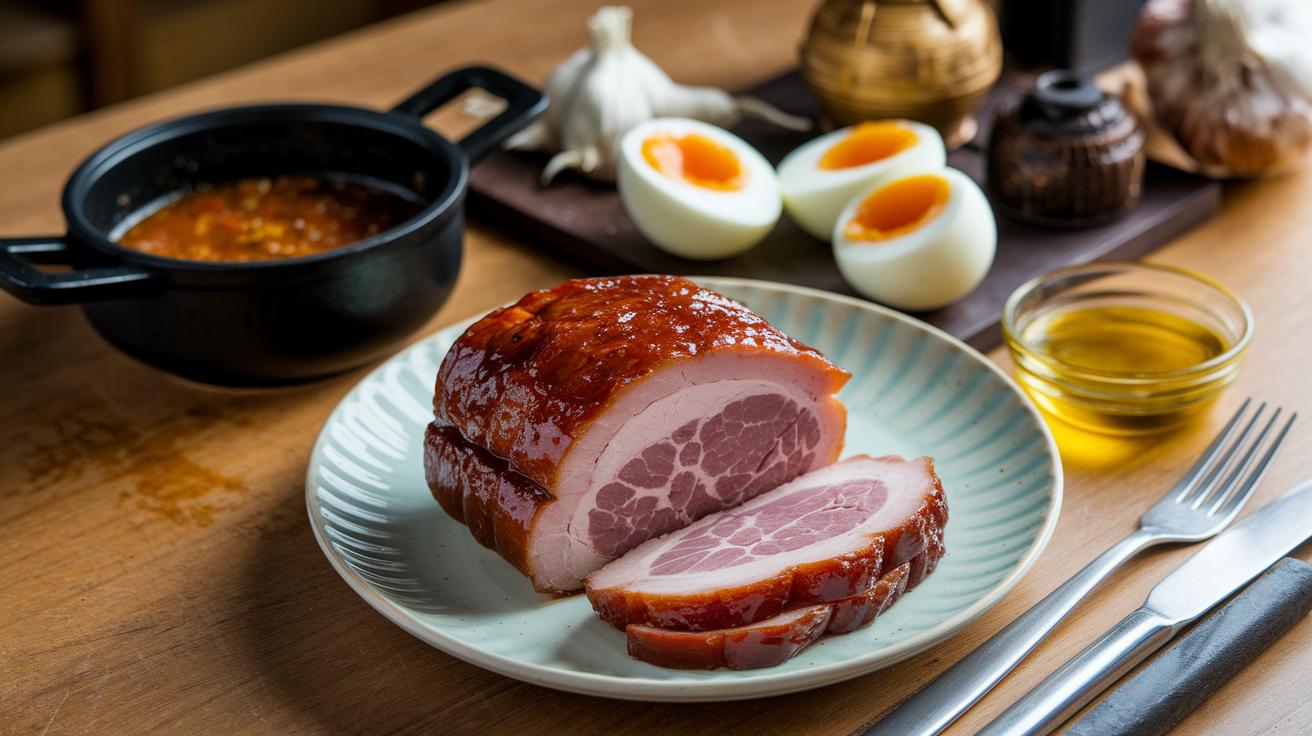
Braise pork belly in a small pot with a few spoonfuls of tare until the meat is soft and full of flavor. Let the pork rest before slicing it as thinly as you can. Aim for slices so delicate that they seem to drape over the noodles.
Next, prepare your eggs. Soft-boil them until the whites are set and the yolks are just a bit runny. Gently remove the eggs and put them in the reserved tare to marinate overnight. This gives the eggs a deep, savory boost that makes every bite more satisfying.
While the pork and eggs rest, make some garlic oil. Heat a few tablespoons of vegetable oil in a small skillet over gentle heat. Add minced garlic and let it sizzle until it turns a soft golden color. This process infuses the oil with a light, aromatic flavor that ties all the toppings together. Keep the heat low so the garlic does not burn.
Set aside the green parts of your chives for garnish to add a fresh, bright note. If you like, you can also add toppings such as menma (bamboo shoots) or crisp nori sheets for extra texture and interest.
When you plate your ramen, arrange the sliced chashu, a half-sliced marinated egg, and a drizzle of garlic oil over the broth. Top your bowl with chive greens and any extra toppings you have chosen. Enjoy experimenting with the presentation to create a bowl that looks as good as it tastes.
Assembling and Serving Tonkotsu Ramen for a Restaurant-Quality Finish
These directions follow the Quick-Start Guide and the Classic Toppings section. Preheat your serving bowl, then pour in hot pork broth and stir in 1–2 Tbsp tare to balance the flavors.
Gently place the drained noodles into the broth. Top them with slices of chashu pork and a soft, marinated egg. Drizzle a little garlic oil and add chive greens, menma, and nori for garnish.
Serve right away, offering extra soy sauce or chili oil so everyone can tailor the taste to their liking.
| Tip | Instruction |
|---|---|
| Warm bowl | Preheat your bowl to keep the broth steaming |
| Flavor balance | Stir in 1-2 Tbsp tare with the hot broth |
| Final touch | Lightly drizzle garlic oil and add your favorite garnish |
Final Words
In the action, we covered key steps from selecting quality ingredients to simmering a rich pork broth and perfecting a simple tare sauce. We explained how to cook noodles quickly and prepare classic toppings like chashu and marinated eggs. Each step helps build a solid foundation for a tonkotsu ramen recipe that brings restaurant-quality flavor into your kitchen. Enjoy making this comforting dish, and let each bowl become a delicious, stress-free highlight of your week.
FAQ
What does a tonkotsu ramen broth recipe involve?
The tonkotsu ramen broth recipe involves simmering pork bones, belly, and chicken wings for 12–18 hours while skimming off fat. This slow process extracts collagen that makes the broth rich and creamy.
What makes an authentic tonkotsu ramen recipe unique?
An authentic tonkotsu ramen recipe centers on a well-developed pork bone broth paired with a tare sauce made from kombu dashi and soy. Variations can include chicken or beef for added flavor.
How is tonkotsu ramen made?
Tonkotsu ramen is made by simmering pork bones and aromatics for hours, preparing a flavorful tare sauce, cooking alkaline noodles briefly, and then assembling each bowl with toppings like chashu, egg, and garlic oil.
Why is tonkotsu broth creamy?
The tonkotsu broth is creamy because long cooking extracts collagen and fat from the pork bones. These components emulsify during the simmering process, giving the broth a silky texture.
Is ramen okay to eat when losing weight?
Ramen can be enjoyed occasionally when losing weight if you control portions and choose lighter toppings. Balancing it with vegetables and lean proteins helps keep the meal nutritious.
Can I eat tonkotsu ramen while pregnant?
Tonkotsu ramen can be suitable during pregnancy if made with fresh ingredients and managed salt levels. Always check with your doctor regarding dietary choices during pregnancy for personalized advice.
What are the differences among Shoyu, Shio, Miso ramen, and Tsukemen?
Shoyu ramen features a soy-based broth, Shio uses salt as the base, Miso ramen has a fermented soybean flavor, and Tsukemen is served with noodles and broth separately for dipping.