
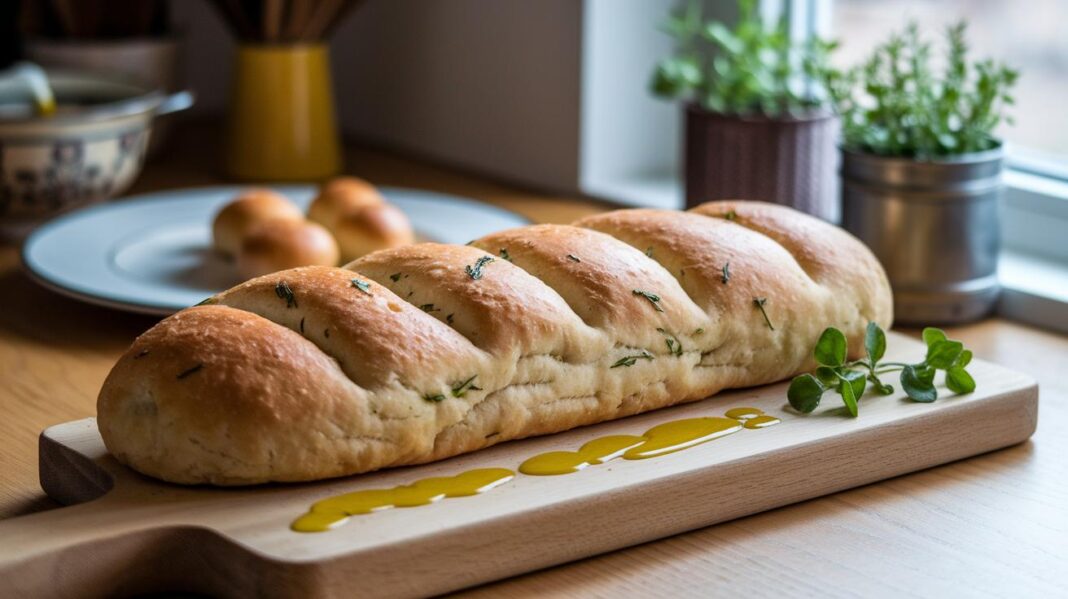

Ever wonder how a few simple ingredients can transform your view on bread? Sourdough focaccia is pure kitchen magic. This recipe takes a wet, shaggy dough and turns it into a light, crisp-edged flatbread that tastes like a slice of the Italian countryside. It gives you a hands-on way to use your sourdough starter and let nature do its work. Follow each step and watch as your dough rises into a rustic, delicious treat.
Complete Sourdough Focaccia Recipe for Homemade Flatbread
This is a simple way to make a tasty focaccia using your sourdough starter. The recipe starts with a wet, shaggy dough that transforms into a golden flatbread with crisp edges and a light, airy crumb. It’s a perfect, hands-on guide for making a rustic Italian flatbread at home.
Ingredients
- 50–100 g active sourdough starter
- 1 cup water
- 1 tablespoon honey
- 3 cups all-purpose flour
- 1 1/2 teaspoons salt
- 3 tablespoons olive oil, divided
- Fresh rosemary and sea salt for topping
- Optional: extra toppings like cherry tomatoes or olives
Instructions
- In a large bowl, mix the sourdough starter, water, and honey. Stir in the flour and salt until a wet, shaggy dough forms.
- Cover the bowl and let the dough rise in bulk at 68°F for about 12 hours, until it doubles or triples in size.
- Transfer the dough to an oiled, rimmed sheet pan and let it rest for 1 to 2 hours for a second rise.
- Using your oiled fingertips, gently dimple the dough to shape it into a rough rectangular form.
- Drizzle olive oil over the dough and sprinkle with extra sea salt and your chosen toppings.
- Bake in a preheated 450°F oven on the center rack for 25 to 30 minutes, until the focaccia turns golden and the edges get crisp.
- Let the focaccia cool on a wire rack for at least 30 minutes to set its airy texture.
Enjoy your sourdough focaccia warm as a snack or use it as a base for a hearty sandwich. A little extra olive oil or a flavorful dipping sauce can make it even more satisfying.
Preparing Your Sourdough Starter for a Perfect Rise
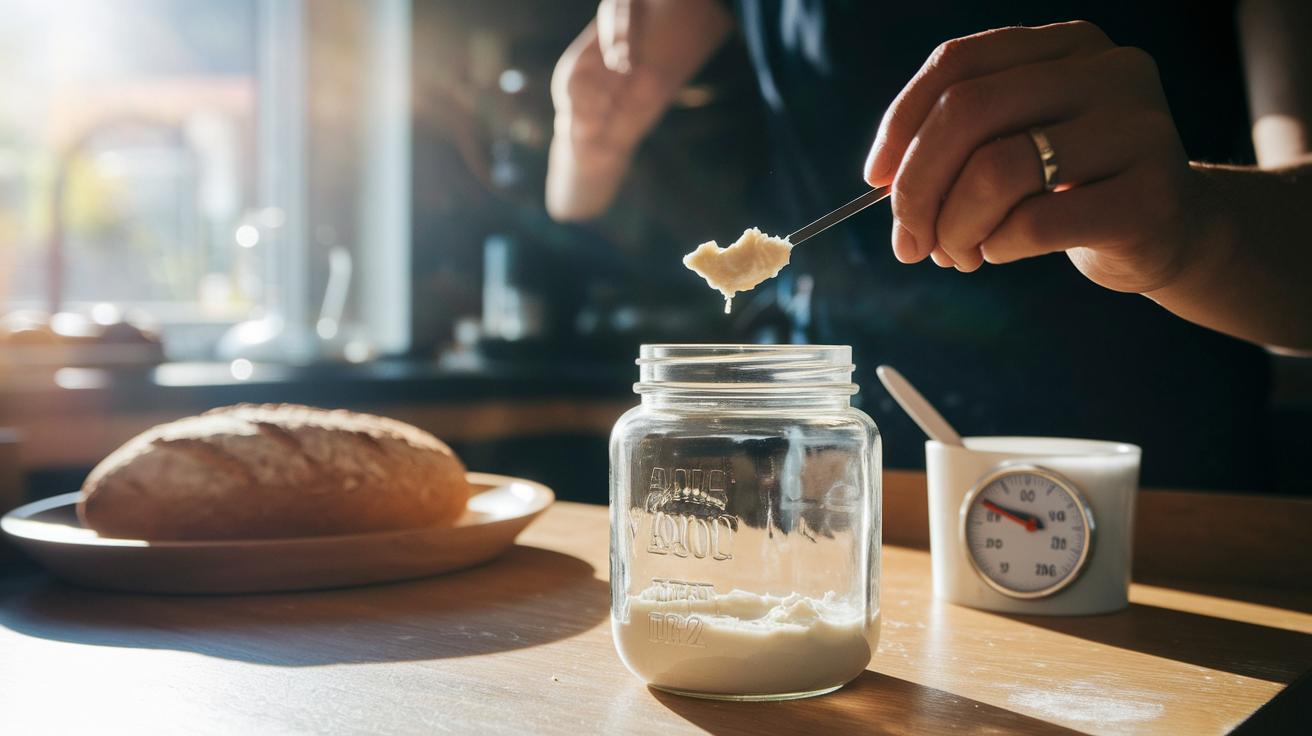
When you prep your sourdough starter, start by getting rid of the extra mix. Keep only 1 to 2 tablespoons of the starter so that you hold on to the liveliest cultures. This simple step cuts down on excess acidity and leaves room for your starter to grow when it’s fed.
Temperature is key. Keep your starter at 68-75°F to help it develop a balanced tang and steady activity. A happy starter means your focaccia will rise naturally and have that special flavor only a live starter can provide.
- Reduce your starter to just 1-2 tablespoons.
- Stir in about 45 g of flour and 45 g of water.
- Mix until the blend is smooth with no dry spots.
- Cover it loosely and let it sit at 68-75°F.
- Look for bubbles or peak activity in 4-6 hours before using.
For an overnight proof, feed your starter in the evening so it has plenty of time to peak by morning. This long proof helps boost natural leavening, leaving you with a lively starter ready to give your focaccia a beautiful rise.
Mixing and Stretching Dough for an Airy Focaccia Crumb
When making focaccia, a high water-to-flour ratio brings a light and open crumb. We aim for a hydration level of 70–75%, which gives the dough plenty of moisture without being too runny. Start by whisking the active starter, water, and honey until the mixture is smooth. Then, stir in the flour and salt until you form a rough, sticky dough. This method traps air bubbles, setting the stage for a wonderfully airy focaccia.
Mixing Technique: Stepwise Combining with a Spatula
Begin by measuring your ingredients carefully so you hit the ideal hydration level.
- Whisk the starter, water, and honey in a large bowl until the mix is even.
- Slowly add the flour and salt while stirring gently with a spatula.
- Continue mixing until you end up with a shaggy, somewhat wet dough.
This careful mixing keeps the gluten relaxed, which helps maintain the air pockets needed for an open crumb.
Folding Guide: Four Gentle Stretch-and-Fold Cycles
Every 30 minutes during the rise, give your dough a gentle stretch and fold.
- Lightly oil a spatula. Lift one edge of the dough, stretch it up, and fold it back over the rest of the dough.
- Rotate the bowl and repeat until you have completed four folds in total.
- Move gently to keep air bubbles intact.
- Let the dough rest for 30 minutes after each fold.
- Keep the dough at a steady temperature during fermentation.
- Trust the process for a perfectly airy focaccia texture.
Fermentation and Proofing Times for Sourdough Focaccia

The recipe calls for an overnight rise of 12-14 hours at 68°F. After that, let the dough rest in an oiled pan for 1-2 hours. If you find the dough has over-proofed, gently press it down and reshape it to balance things out. Feel free to adjust these times a bit depending on how warm your kitchen is.
Baking Tips: Oven Temperatures and Crisp Crust Secrets
Start by preheating your oven to 450°F. Place your baking steel or hot tray on the center rack so that heat spreads evenly. This step gives your focaccia a rich, golden crust and those tasty, crisp edges we all love.
To get a perfect mix of a soft crumb and a crunchy crust, always put the focaccia in the center of the oven. A few simple tricks can boost the crispiness: try misting a little water into the oven or even putting a tray of ice cubes inside to create steam.
- Preheated surface for even heat.
- A touch of steam to lock in the crust.
- Oiling the sheet pan for extra crunch.
- Rotating the pan midway for uniform cooking.
- Letting it cool on a wire rack to keep the bottom crispy.
Flavor Variations and Toppings for Sourdough Focaccia

After your focaccia is dimpled, drizzle it with good olive oil and sprinkle sea salt on top. This simple step is the perfect start to trying different toppings that pack a punch of flavor. You can use classic rosemary with thin garlic slices or get creative with options like caramelized onions and za'atar. You can even mix some toppings into the dough for extra taste and texture.
- Classic rosemary paired with thinly sliced garlic
- Cherry tomatoes with basil chiffonade
- Mixed olives with a crumble of feta
- Caramelized onions drizzled with balsamic reduction
- Grated Parmesan with cracked black pepper
- Za'atar with a touch of lemon zest
- Fresh thyme and oregano for a herb kick
- Sliced red peppers and artichoke hearts with an extra drizzle of olive oil
| Topping Combo | Prep Notes |
|---|---|
| Rosemary & Garlic | Thinly slice garlic and finely chop rosemary |
| Cherry Tomatoes & Olives | Halve tomatoes and remove pits from olives |
| Caramelized Onions & Za’atar | Slow-cook onions until soft, then sprinkle za’atar evenly |
Adding toppings inside the dough makes the flavor go deeper, while topping the finished focaccia gives it a bright, final touch. Each topping combo turns your sourdough focaccia into a home-cooked delight that works great as an appetizer, a base for sandwiches, or simply paired with a tasty dip.
Troubleshooting and Quick Hacks for Sourdough Focaccia Success
If your dough proves too much, gently press and reshape it to even out the gas bubbles. This careful deflation helps the dough rise well in the oven. Remember, your lively starter means you don't need any extra yeast.
Also, check your dough’s hydration. If it feels very loose, add about 5% more flour. If it’s too firm, mix in around 5% extra water. These small tweaks keep your dough easy to work with and light at the same time.
When you're short on time, try a par-bake. Preheat your oven to 425°F and bake the focaccia for 15 minutes to partially set the dough. You can finish baking later when it fits your schedule.
Here are some quick tips:
- Keep an eye on the proofing temperature for a steady rise.
- If you notice overproofing, gently reshape the dough.
- Adjust hydration by adding or reducing about 5% flour or water.
- Use a par-bake at 425°F for 15 minutes for a make-ahead option.
- Handle the dough gently so you don’t lose its structure.
Final Words
In the action, we showed how to build a delicious sourdough focaccia recipe by combining a lively starter, gentle stretch-and-fold steps, and smart proofing. Simple guidelines covered mixing, rising, baking, and creative toppings to create an airy crumb with a crisp crust. We also shared practical fixes for any small issues along the way. Your next homemade Italian flatbread is set to shine. Enjoy every bite and keep cooking with confidence.
FAQ
Frequently Asked Questions
What is sourdough discard focaccia?
Sourdough discard focaccia uses leftover starter to create a tangy flatbread. The discard is mixed with basic ingredients, resulting in a rustic, airy focaccia with a crisp, golden crust.
How does a same‑day sourdough focaccia recipe differ from an overnight version?
A same‑day recipe uses a faster, 4–6‑hour rise in a warmer kitchen, while an overnight version ferments for 12+ hours, enhancing flavor depth and texture through a longer, gentler rise.
Can I turn sourdough dough into focaccia?
Yes, you can shape sourdough dough into focaccia. Simply spread the dough in an oiled pan, dimple it with oiled fingertips, drizzle with olive oil, and allow a rise to create the signature crisp edge and soft interior.
What makes sourdough focaccia special?
Sourdough focaccia is special due to its natural fermentation, which creates a tangy flavor, open crumb, and a satisfying crisp crust. This artisanal method results in a unique, delicious flatbread.
What is the secret to making good focaccia?
Good focaccia comes from balanced hydration, proper fermentation, and gentle dough handling. Dimple the dough and finish with olive oil and salt to achieve a light, crispy texture and rich flavor.
Which is healthier: focaccia or sourdough bread?
Sourdough bread benefits from natural fermentation and a lower glycemic index, while focaccia offers flavor from olive oil and toppings. Your choice depends on personal dietary preferences and nutritional goals.
Is there a gluten‑free focaccia option?
Yes, you can make gluten‑free focaccia by using a tested blend of gluten‑free flours. Adjust the hydration and handling to create a similar light, airy texture without gluten.
Can I make rosemary garlic or cinnamon sourdough focaccia?
Absolutely. You can top your focaccia with rosemary and garlic for a savory twist or add cinnamon for a sweet variation. Experiment with herbs and spices to create a personalized flavor profile.