


Ever wondered if one simple sauce could transform your eggs benedict? This hollandaise delivers a creamy twist that brightens your breakfast. In this guide, I show you how to make it with common ingredients: egg yolks, lemon juice, cream, and clarified butter. You’ll follow a classic, step-by-step method to whip up a smooth, tangy sauce that takes your dish from ordinary to memorable. Enjoy creating this delightful sauce in your kitchen!
Quick and Detailed Recipe Guide for Hollandaise Sauce
Ingredients:
- 3 egg yolks
- 1 Tbsp lemon juice
- 1 Tbsp cream
- Salt and pepper, to taste
- ½ cup unsalted butter (clarified)
-
Separate the yolks of 3 eggs into a heatproof bowl. Add 1 Tbsp lemon juice, 1 Tbsp cream, and a pinch of salt and pepper. Whisk until the mixture is smooth, light in color, and slightly thick.
-
To clarify the butter, gently melt ½ cup unsalted butter in a small saucepan. Skim off the milk solids so you are left with a clear, golden liquid. Heat this butter until it reaches about 180°F.
-
Set a pan of simmering water on the stove and place the bowl with your egg mixture over it. Slowly drizzle the warm clarified butter into the bowl while whisking constantly. This slow addition and constant stirring help the sauce thicken into a rich, glossy blend.
-
If you prefer using a blender, add the egg yolks, lemon juice, cream, salt, and pepper to the blender container. With the immersion blender running, slowly pour in the warm clarified butter. Continue blending for about 5 minutes until the sauce becomes velvety.
-
Should the sauce break or look too thin, whisk in 1 tsp of warm water or add an extra yolk. The key is to add the hot butter gradually and stir all the time to keep the sauce smooth.
Your hollandaise sauce is now ready to enhance dishes like eggs benedict. Enjoy every drizzle of this homemade, creamy, and tangy sauce!
Essential Ingredients and Traditional Emulsification Methods for Hollandaise Sauce
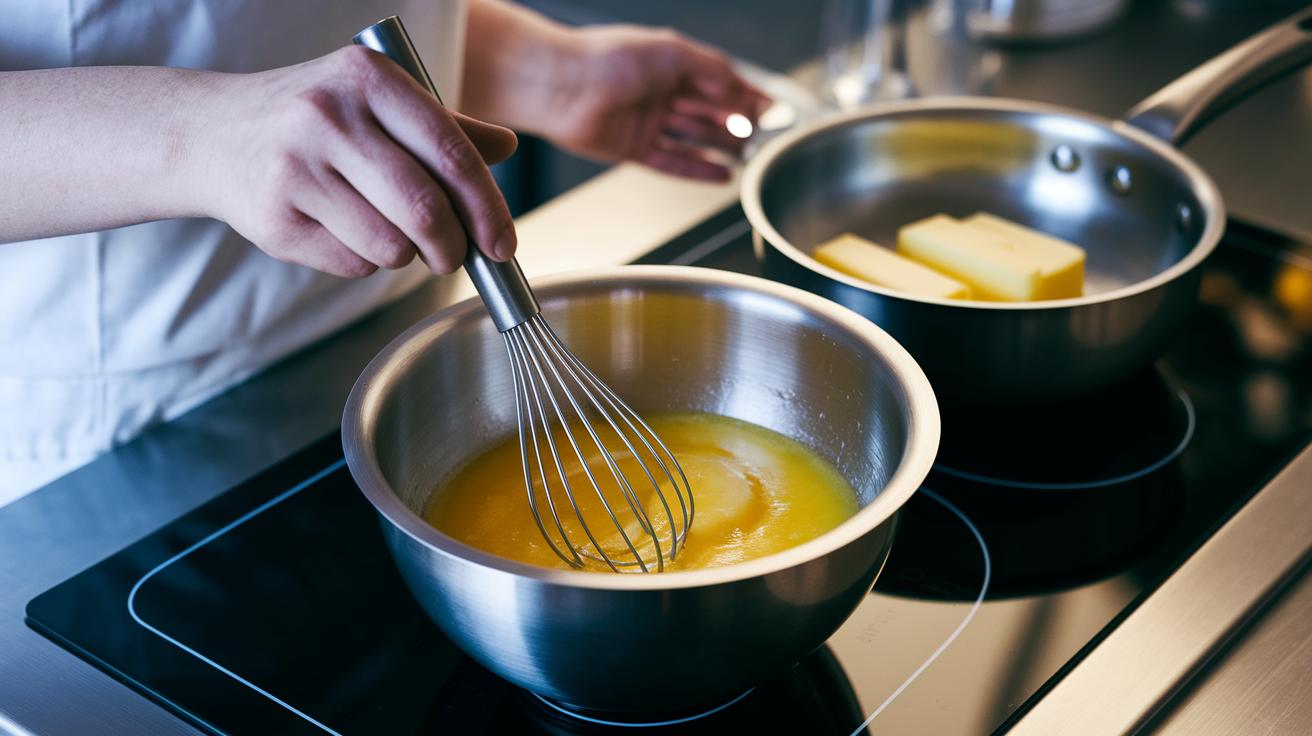
This method uses only 5 ingredients for a light, clear flavor and delicate texture. It’s a classic whisk-based approach that stands apart from cream-based or blender versions.
Start by separating 3 egg yolks into a heatproof bowl. Whisk in 1 Tbsp lemon juice with a pinch of salt and pepper until the mixture lightens. Then, place the bowl over a small pot of gently simmering water.
In another saucepan, melt ½ cup unsalted butter. Skim off the milk solids to get clarified butter, a clean fat that gives the sauce its pure taste. With the heat low, slowly drizzle the warm, clarified butter into your yolk mixture while whisking quickly. This careful addition keeps the yolks from cooking and helps the butter blend into a smooth, glossy sauce.
Key steps:
- Separate 3 egg yolks into a heatproof bowl.
- Whisk in 1 Tbsp lemon juice, salt, and pepper until the mix lightens.
- Place the bowl over simmering water.
- Slowly drizzle in ½ cup clarified butter while whisking constantly.
- Stir until the sauce is smooth and glossy.
Tip: Clarifying the butter removes milk solids for a cleaner flavor. French chefs have trusted this method for centuries to balance tangy lemon with rich, buttery goodness.
Mastering Heat: Controlled Heating and Warming Tips for Creamy Hollandaise
Controlling the temperature is key for a hollandaise sauce that clings perfectly to your eggs benedict. Begin by melting butter until it reaches about 180°F. If the butter stays too cool, your yolks won't mix well; if it's too hot, you might scramble them. I always use an instant-read thermometer to get it just right.
When you whisk egg yolks, lemon juice, and your seasonings, try using a double-boiler. Keep the water at a gentle simmer and slowly drizzle in the hot butter while whisking constantly. This steady, soft heat helps the sauce turn silky and smooth without turning into scrambled egg.
For poached eggs, keep the water at a soft simmer with tiny bubbles for about 3 minutes. A splash of vinegar in the water helps the egg whites set neatly around the yolk, making your dish look as good as it tastes.
If you need to reheat your hollandaise, do it with care. Use the microwave on low power for 10–20 seconds, stirring every 5 seconds. Alternatively, warm the sauce over a bain-marie to prevent overheating. Serve it at about 140°F so it pours easily and clings perfectly to your poached eggs.
Try these tips and enjoy a smooth, bright hollandaise on your eggs benedict every time!
Whisking and Mixing Techniques to Prevent Broken Hollandaise Sauce
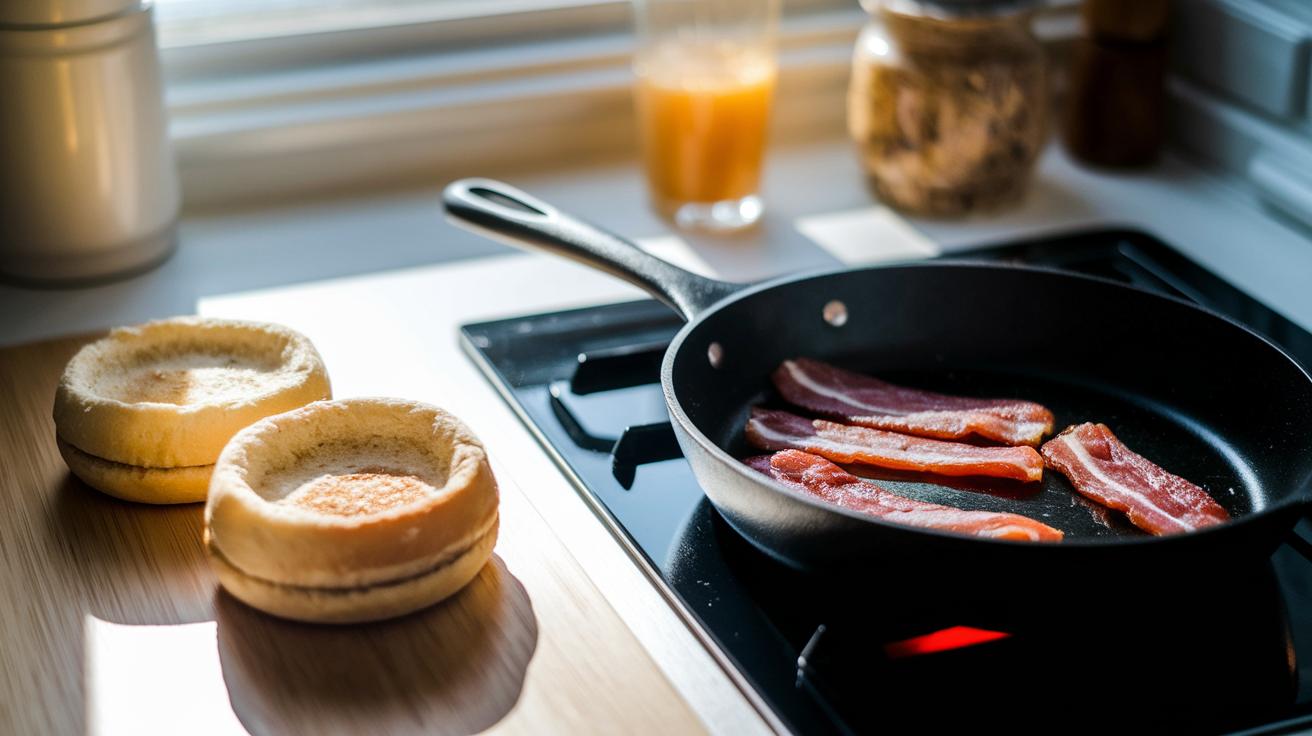
We've merged this part into the main hollandaise sauce recipe to keep things simple. This way, you won't see repeated tips on using bowl-over-simmering water or the immersion blender method. For advice on slowly drizzling in warm, clarified butter and fixing a broken sauce, check the earlier sections.
Signature Brunch Assembly with Hollandaise Sauce for Eggs Benedict
Start by lightly toasting English muffin halves until they turn golden and slightly crisp. Keep them warm so they serve as a sturdy base for everything else.
Heat a skillet over medium-high heat and sear Canadian bacon until the edges get a bit crispy. You can also use ham, sautéed spinach, or smoked salmon if you’d like a different twist.
Next, poach your eggs for about 3 minutes. This cooks the whites just enough while keeping the yolks deliciously runny. Let the eggs rest on paper towels for a moment to remove extra water.
Now, build your dish:
- Place the warm, toasted muffin halves on your plate.
- Add a slice of seared Canadian bacon to each muffin.
- Gently nestle a poached egg on top.
- Spoon a generous amount of warm hollandaise sauce over the egg so it drizzles nicely over the layers.
Finish by sprinkling a small amount of chopped chives or paprika on top for color and a hint of spice. For a creative twist, use any extra hollandaise on roasted asparagus or broccoli, or even mix it into an Eggs Florentine dish. Enjoy your brunch with this perfect blend of texture and flavor.
Storage, Reheating Guidelines, and Flavor Tweaks for Hollandaise Sauce
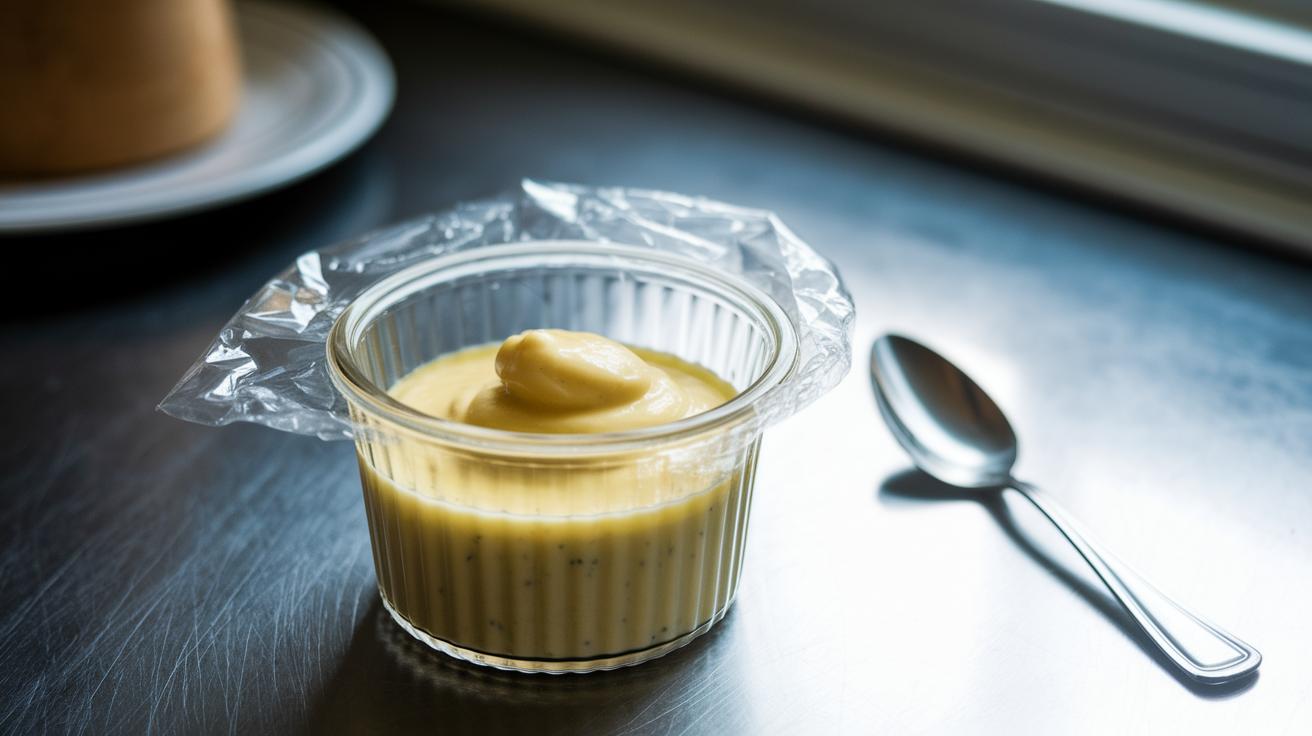
Let your hollandaise sauce cool a bit after making it. Then, spoon it into an airtight glass container and cover the surface with plastic wrap. This simple step stops a skin from forming and keeps the sauce smooth for up to 2 days in the fridge.
When you’re ready to use it again, reheat gently to keep the sauce from separating. You can heat it low in the microwave for 10 to 20 seconds, stirring every 5 seconds. Or, warm it over a double boiler and stir constantly. Keep the temperature below 145°F so the sauce stays smooth.
For a flavor boost, add a pinch of cayenne, a drop of Dijon mustard, or a sprinkle of fresh lemon zest. These little touches give the sauce a subtle kick and balance its rich, buttery taste. Reheat only what you need and stir well before serving.
Final Words
In the action, this recipe guide showed clear steps to create a velvety hollandaise sauce for eggs benedict. We broke down each phase, from whisking egg yolks with lemon juice to clarifying butter and controlling heat. Each tip, including how to rescue a broken sauce and perfect your emulsion, makes this brunch recipe reliable and fun to make on busy nights.
Small touches, like storage and reheating tips, help build confidence in the kitchen. Enjoy your brunch with a rich and perfect hollandaise sauce for eggs benedict!