


Did you ever think leftover rice could become a favorite around the world? Long ago in China, cooks turned day-old rice into a tasty meal by stir-frying it in a hot wok. This trick started during the Sui Dynasty and turned simple leftovers into something even emperors enjoyed. Fried rice shows that smart cooking can bring out bold flavors and lasting traditions. Discover how a bit of clever thinking transformed a humble family recipe into a timeless dish.
How Fried Rice Originated in Ancient China
During the Sui Dynasty (581–618 CE) home cooks made every grain count. Leftover rice was seen as a smart resource instead of waste. Families reused cold, day-old rice because its firmer texture worked better than freshly cooked rice. This clever habit helped create a dish that soon became a kitchen staple.
Leftover rice got a new life when it was stir-fried in a hot wok. Cooks tossed chilled rice with a bit of oil over high heat to let the grains separate and crisp up. They perfected this trick through trial and error, and the practice was passed down through generations. Many traditional recipes still call for day-old rice to avoid the mushiness of fresh rice. What started as a practical solution in family homes eventually earned a spot at imperial banquets.
This simple technique of quickly tossing leftover, cold rice in a hot pan laid the foundation for a culinary tradition that endures. The method from the Sui Dynasty has evolved into a versatile dish loved around the world, all while honoring its humble beginnings in ancient Chinese cooking.
Dynastic Transformations in the Origins of Fried Rice
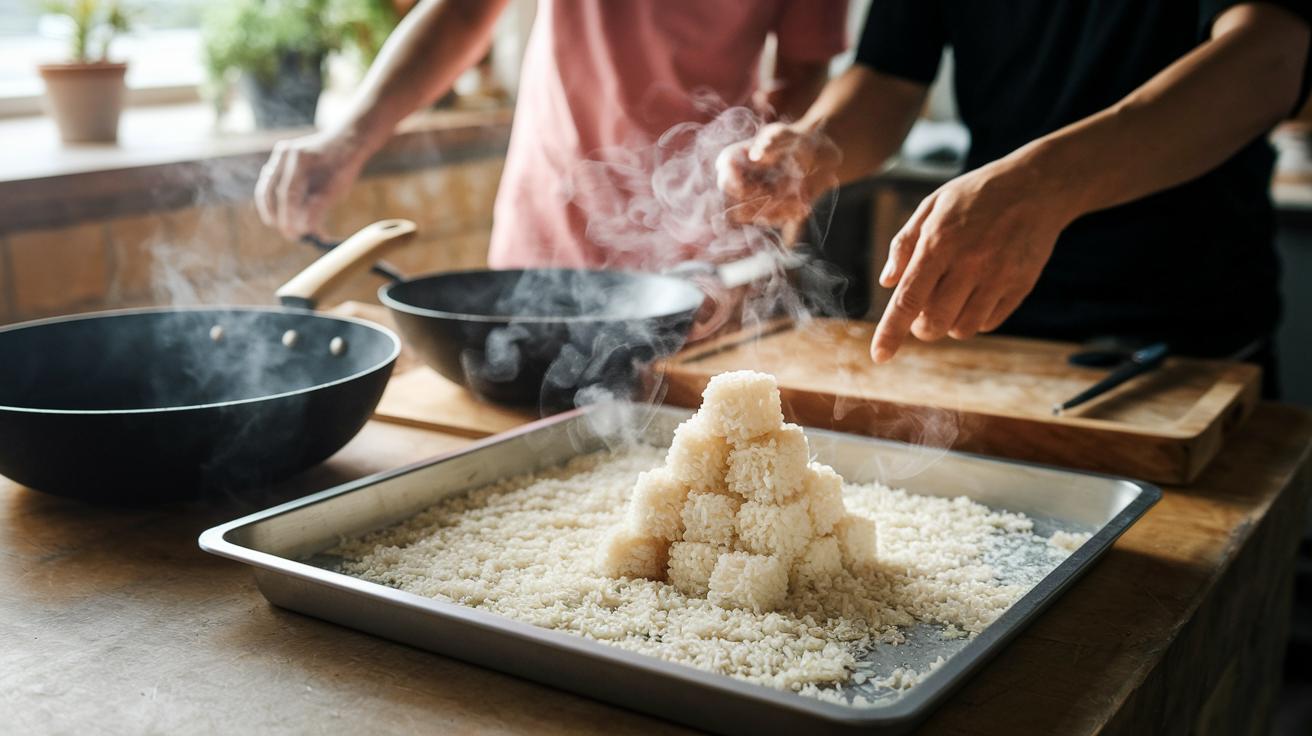
Families have always cherished the simple trick of cooling day-old rice. This method is more than just a recipe; it shows care and resourcefulness with every grain. I recall how one clever cook would spread warm rice on a tray, letting it cool so each grain stayed separate. My grandmother once arranged the rice like little building blocks to keep the texture just right during stir-frying.
Over time, changes in kitchen tools helped shape different regional styles. Old cast-iron pans were replaced by special woks. In some areas, cooks used wide, shallow pans for quick tossing, while in others, deeper pans helped distribute heat evenly. One local cook even said that using a shallow wok made their rice crisp with every stir, a change inspired by local trade and influence.
Today, the chilled-rice method is still a trusted step in many kitchens. Modern cooks spread freshly made rice thinly on a tray and chill it in the fridge for 30 minutes. This age-old trick keeps each grain separate and delivers the perfect texture every time.
Traditional Techniques and Ingredients in Fried Rice Origin
Old, cooled rice is the secret to perfect fried rice. It helps each grain stay separate when you stir-fry at high heat. If you only have fresh rice, spread it on a baking sheet and chill it for 30 minutes so it firms up nicely.
Here’s what you need:
- Day-old jasmine rice (keeps grains distinct)
- A neutral-flavor oil (handles high heat well)
- A beaten egg (coats the rice and adds richness)
- Fresh aromatics like garlic and scallions
- A light seasoning such as salt or a mild soy sauce
Using beaten egg to coat the rice comes from methods dating back to the Sui Dynasty. This technique helped shape the balanced and practical stir-fry we enjoy today.
Fried Rice Origin: Rich, Flavorful History

These days, many home cooks use non-stick pans or even rice cookers to make fried rice. A non-stick pan gives the rice a light, even coating, and a rice cooker offers steady heat along with the convenience busy kitchens need. This modern approach keeps the core flavor of fried rice while adapting it for today's fast-paced lifestyle.
Diet trends have also influenced how we cook fried rice. Many people swap white jasmine rice for brown rice or quinoa for a heartier dish that still has great texture. Some choose tamari instead of soy sauce for a milder, gluten-free option. Others add tofu to create a vegan version that stays true to the savory nature of classic fried rice.
Today, a wider range of ingredients makes fried rice even more versatile. Fresh vegetables like bell peppers, snap peas, and carrots join proteins such as chicken or shrimp, making each dish unique. What began as a way to use leftovers has grown into a favorite that suits kitchens around the world.
Social Media and Popular Culture's Take on Fried Rice Origin
Uncle Roger’s funny videos have gained millions of views on YouTube and TikTok. His playful style puts a fun twist on classic cooking methods and inspires new home cooks.
Today, many home chefs top their fried rice with sliced green onions, a sprinkle of sesame seeds, or a lime wedge. These eye-catching touches not only boost the dish’s look but also hint at old secrets for perfect texture and flavor. Everyone knows that day-old rice is best and this tip has been shared for generations in photos and videos. This modern food fun keeps classic techniques alive in every kitchen.
Online chats help clear up myths and share the true story of fried rice. People swap recipes and tips, making sure the real history stays in view.
Final Words
In the action of exploring history and technique, the blog post shows that fried rice originated in ancient China during the Sui Dynasty.
We traced how day-old rice turned into a simple cooking method that evolved with each dynasty.
Traditional stir-frying became a reliable way to reuse leftovers, paving the way for global adaptations and modern twists.
This look at the fried rice origin highlights a timeless recipe that lets home cooks enjoy creative, stress-free meals every night.
FAQ
What is the origin country of fried rice?
The fried rice origin country is China. It began during the Sui Dynasty (581–618 CE) when cooks reused day-old rice, laying the foundation for a dish celebrated for its clever use of leftovers.
Who invented fried rice?
The inventor of fried rice is unknown. Early Chinese cooks created it by stir-frying leftover rice with available ingredients, transforming a simple food-saving idea into a timeless favorite.
Is fried rice Chinese or Japanese?
Fried rice is mainly a Chinese creation. Its roots are deeply tied to ancient Chinese kitchens, though its popularity has spread worldwide, including influencing dishes in Japan.
What are the origins of chicken and egg fried rice?
The origins of chicken and egg fried rice lie in traditional Chinese cooking. Cooks mixed day-old rice with proteins like egg or chicken, evolving simple leftovers into flavorful dishes.
Is fried rice American or Chinese?
Fried rice is Chinese by origin. While American versions exist due to cultural exchange and adaptation, the dish started in China as a practical way to reuse leftover rice.
Can you share 10 facts about fried rice?
Ten facts include its roots in ancient China during the Sui Dynasty, the use of day-old rice for perfect texture, evolution from a leftover solution, various protein additions, influence on global cuisines, and modern adaptations in timing and ingredients.
How did fried rice make its way to America?
Fried rice reached America through Chinese immigrants who brought their culinary traditions. Over time, the dish adapted to local tastes and ingredients while preserving its original method of stir-frying chilled rice.
Is fried rice good for dialysis patients?
Fried rice can be suitable for dialysis patients if prepared with careful control of sodium and potassium. A modified recipe that considers portion size and ingredient choices is recommended after consulting with a healthcare provider.
Is fried rice ok for diabetics?
Fried rice can fit into a diabetic-friendly diet when made with whole grains like brown rice and plenty of vegetables. Balancing the dish with lean protein and monitoring portions can help manage blood sugar levels.
How does fried rice compare to chow mein, Pad Thai, shrimp fried rice, fried noodles, and egg foo young?
Fried rice centers on stir-fried, day-old rice mixed with vegetables and protein. In contrast, chow mein and fried noodles use noodles, Pad Thai features a tangy tamarind sauce, and egg foo young is a savory omelet dish—each offering unique textures and flavors.