
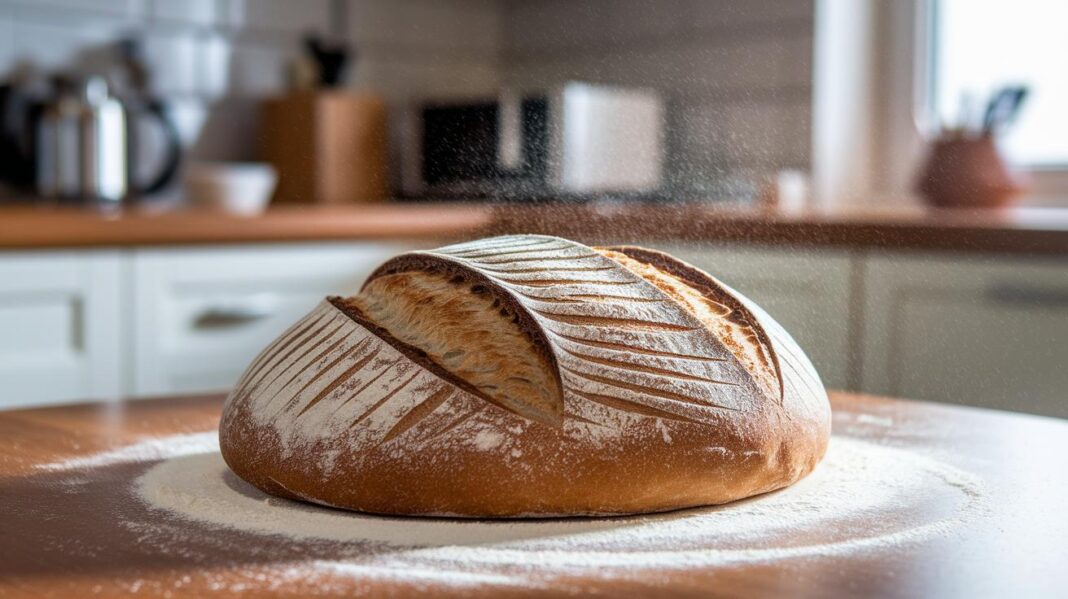

Ever wonder if scoring your sourdough is just fancy decoration? Many bakers believe those neat cuts only add a touch of beauty, but they do much more. They let air escape and help guide the dough’s rise. When you score your dough correctly, you set the stage for a light, crisp crust and an open, airy crumb. In this post, we break down how proper cuts shape the baking process so that every loaf rises beautifully. Stick with us for simple tips to boost your oven spring every time.
How Scoring Sourdough Bread Shapes Oven Spring and Crust Structure
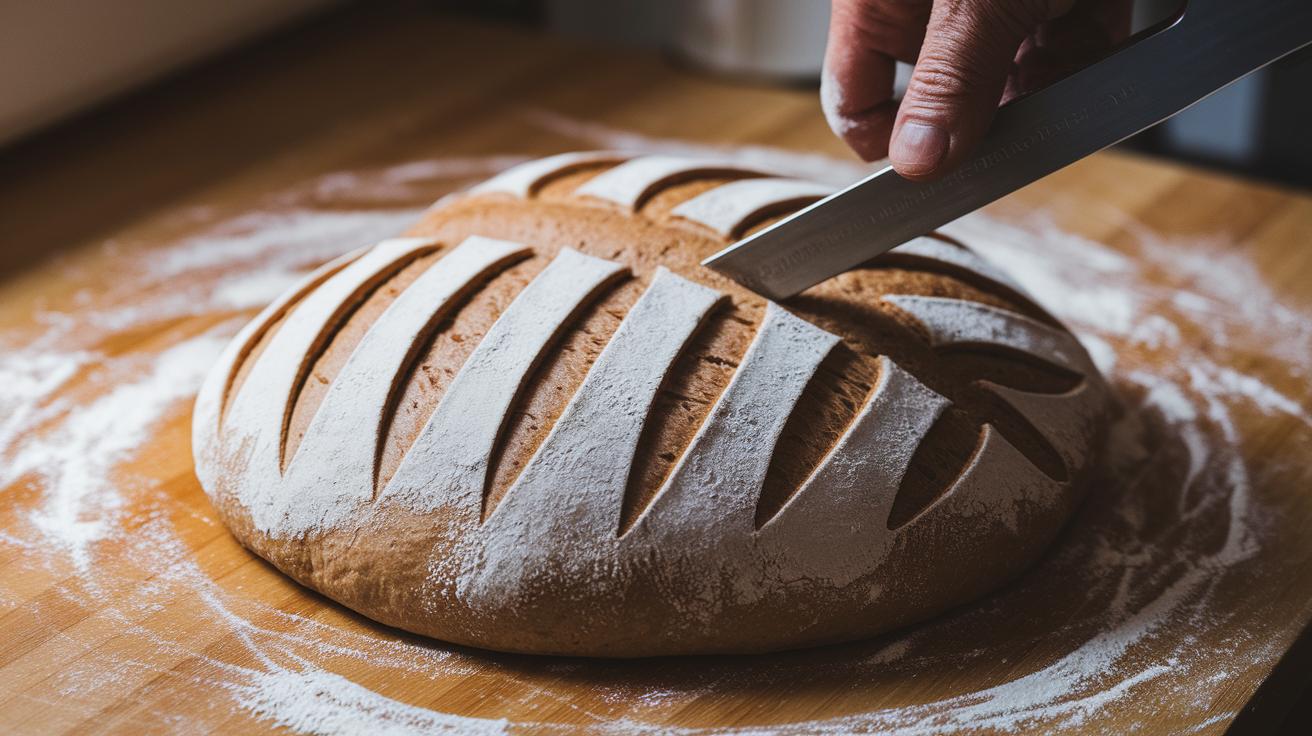
Scoring your sourdough lets trapped air escape and guides how the dough expands in the oven. Making controlled cuts helps the bread rise in certain spots and stops random bursts that can flatten your loaf. One set of shallow cuts (about 1/4 inch deep) creates a pretty pattern, while slightly deeper cuts (around 1/2 inch) give the dough room to push out for a great rise.
Cutting a cold-proofed dough is key. Chilled dough holds its shape better, so your cuts come out clean and precise. Score the dough right after bulk fermentation and just before baking. This way, the hot oven locks in your design fast. For a little extra flair, dust a bit of flour on the dough before making your cuts, it makes the lines stand out beautifully.
Always use a sharp tool like a razor blade or a good bread lame. A sharp blade makes neat cuts without tearing the dough, while a dull tool can leave ragged edges that affect how the bread rises.
Smart scoring channels the expanding gases and helps form a crispy, well-structured crust. Try different designs and see how your careful cuts lead to loaves with a light, airy crumb and a standout look.
Essential Blade and Tool Selection for Scoring Sourdough Bread
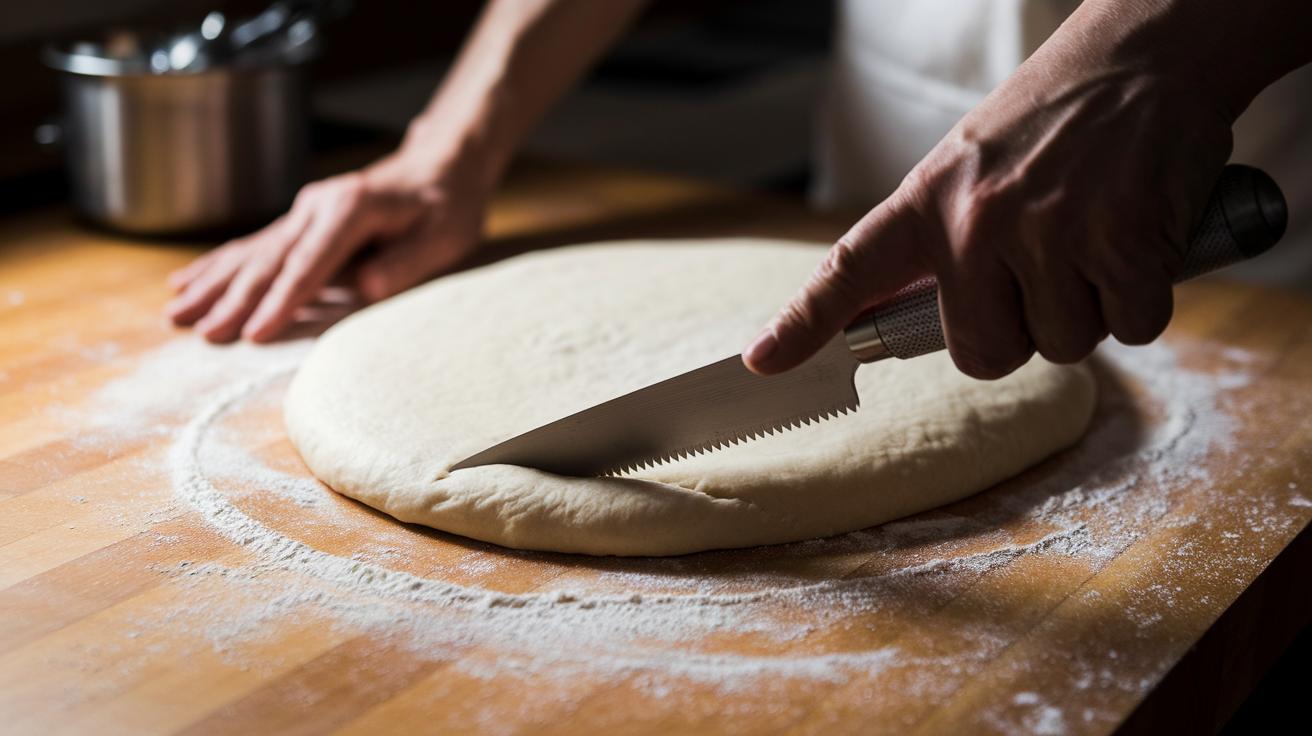
When scoring sourdough, a sharp and dependable tool makes all the difference. A clean cut helps control how the dough expands and gives the crust a nice, crisp structure. The best tools for this job are razor blades, traditional bread lames, and sharp kitchen scissors. Regular knives, even when sharpened, often do not have the right edge and may tear the dough.
For instance, a razor blade can slice easily through cold dough and leave a neat, defined line. Many bakers love the Monkey Wire Shop "UFO" lame because its round wooden disc offers better control than lames with long handles. Its design helps you make precise and steady cuts while keeping your hand comfortable.
Top tools for scoring include:
- Razor blades with a kept edge
- Traditional bread lames like the Monkey Wire Shop "UFO" for accuracy
- Sharp kitchen scissors as an alternative
Be sure to sharpen and care for your tool often. Doing a quick scratch test on a spare surface can show you if the blade is ready before you score your dough. With the right tool and a steady hand, each cut boosts oven rise and creates a beautifully patterned sourdough loaf.
Timing Your Scoring: When and Where to Score Your Sourdough Loaf
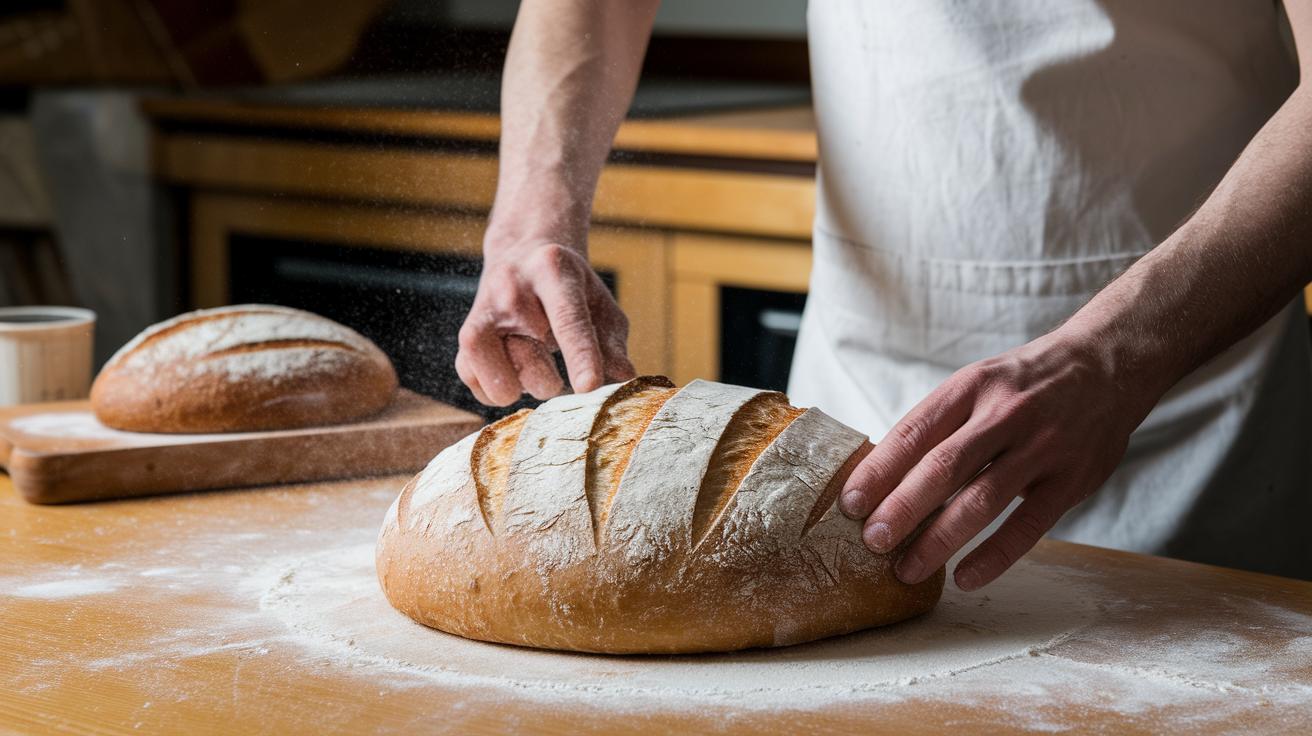
Scoring your sourdough gives it a unique look and can influence the way the crumb sets. Scoring right when you slide the dough into the oven forms a tight, controlled crumb. If you score just 2-3 seconds early, you might notice a more open and airy inside, which makes the bread feel lighter.
High hydration dough behaves in its own way. Its looser texture can mean less defined cuts if you score too soon. But if your dough is chilled well, your scores come out sharp and clear. Adjust your timing based on your kitchen temperature. In warmer kitchens, an earlier score can help balance the fast rise in the oven.
The type of oven matters too. In convection ovens, the heat is intense, so the crust forms quickly and even small timing tweaks can change the score's look. Traditional ovens heat more gently, letting the scores develop with softer edges and subtle curves.
Steps to experiment with scoring:
- Try scoring 2-3 seconds earlier than normal to see how the crumb changes.
- For high hydration dough, consider scoring as you transfer the dough to keep the cuts neat.
- Make sure to adjust based on your kitchen temperature and the type of oven, taking note of the small differences each time.
Step-by-Step Guide to Scoring Sourdough Bread for Beginners
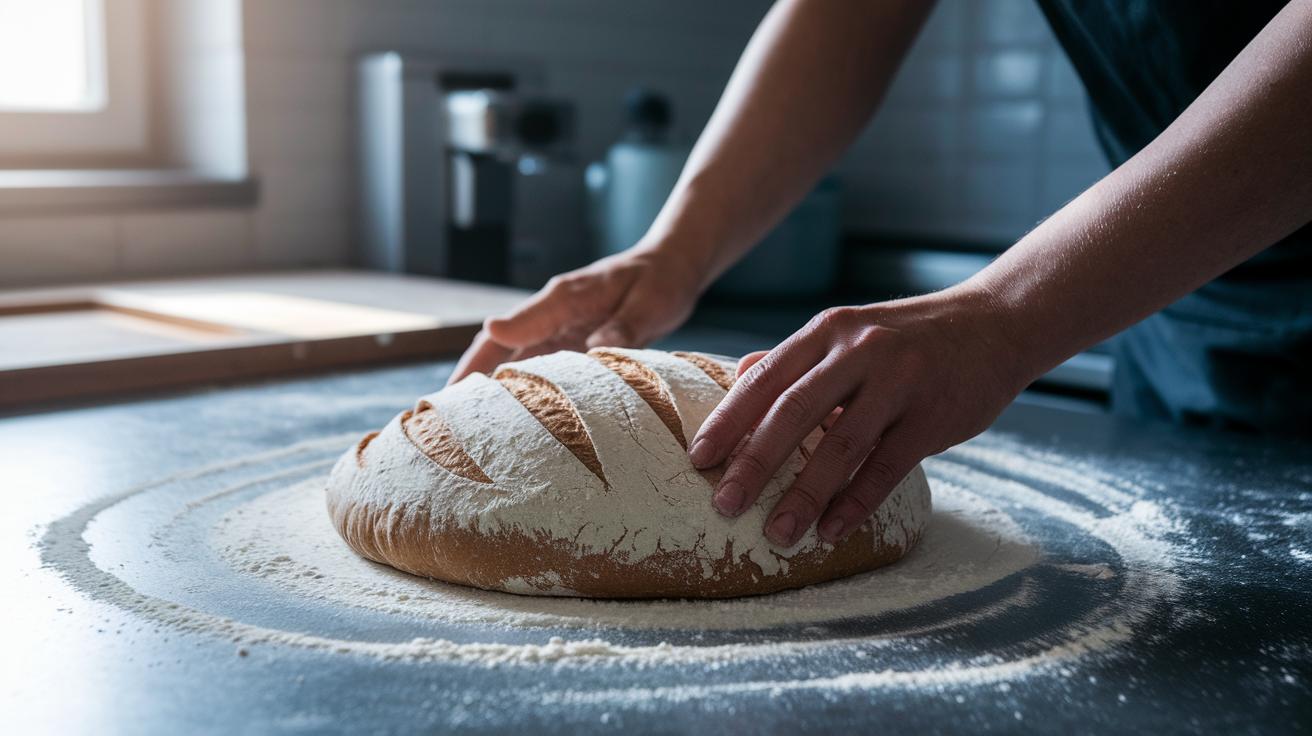
-
Chill the dough briefly.
After the final rise, put your dough in the fridge for 10 minutes. This firms it up and makes scoring easier. -
Dust the surface with flour.
Lightly sprinkle flour over the dough. The flour keeps the blade from sticking and makes your cuts clear as the bread bakes. -
Score with a clean blade.
Hold your scoring tool at a 30 to 45 degree angle and make a steady cut. Wipe the blade after each slice to prevent dough buildup. -
Choose your cut depth.
Decide between a shallow 1/4-inch cut for a pretty design or a deeper 1/2-inch cut that lets the dough expand. The lighter cut adds flair, while the deeper cut helps with rising. -
Transfer the loaf quickly.
Move your scored dough into the preheated Dutch oven right away. This quick step locks in the dough’s structure and boosts oven spring. -
Troubleshooting scoring tips.
If your cuts come out uneven, make sure the blade is sharp and clean it between slices. If the dough feels too soft, use a firm, steady motion while scoring.
Innovative Cut Patterns for Scoring Sourdough Bread
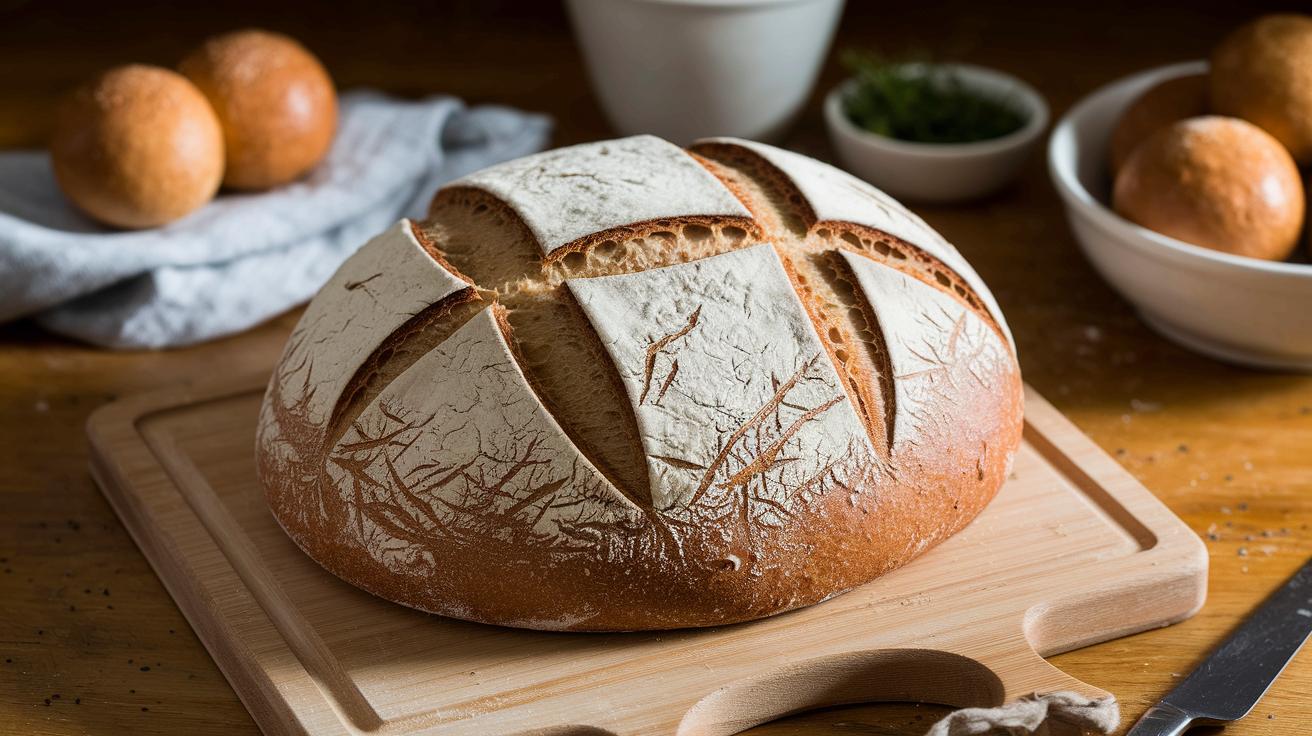
When you score your sourdough with creative cuts, you not only make it look beautiful but also help the bread rise better. These smart designs let steam and gases escape to boost oven spring and give your crust a perfect crunch. Experienced bakers enjoy crafting unique patterns that add style while keeping the dough intact.
Give the wheat with half-moon expansion a try. Start with a vertical 0.5-inch slash on the top. Then add neat diagonal 0.5-inch cuts down each side and finish with a smooth half-circle on the opposite side. This set of cuts creates a standout design and helps the bread expand evenly.
Below is a table that shows four popular scoring designs, including their cut arrangements and depths:
| Design | Slash Arrangement | Required Depth |
|---|---|---|
| Wheat with Half-Moon Expansion | Vertical 0.5 inch at top, diagonal 0.5 inch cuts, half-circle on opposite side | 0.5 inch |
| Wheat Square | Two vertical cuts (4 inches each) spaced 4 inches apart; two horizontal cuts 0.5 inch from their tops | Vertical 4 inches; Horizontal 0.5 inch |
| Simple Cross | Single center slash | 4 to 5 inches |
| Batard Ear Slash | One long, continuous cut to form a pronounced ear | Variable, deep enough for ear effect |
Each pattern brings both style and function. For example, the wheat square helps the dough expand evenly so your loaf looks as good as it tastes. A simple cross score opens up the crumb and creates a bold ear effect. Try these designs and see which one fits your baking style best.
Troubleshooting Dough Scoring Mistakes in Sourdough Bread
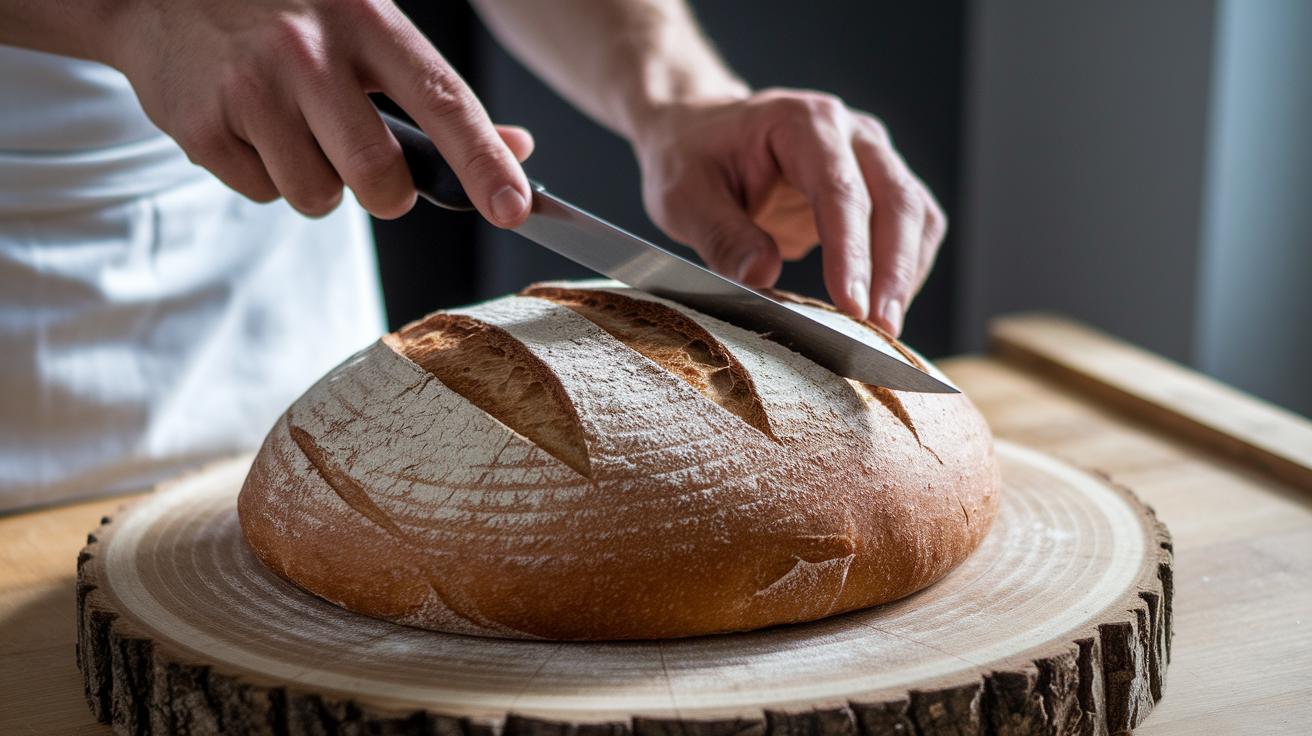
If your sourdough bread isn’t turning out the way you hoped, it might be your scoring. Over-fermented dough can get sticky and flat, which makes it hard for those cuts to hold their shape in the oven.
Here are a few common mistakes to check:
- Shallow cuts: When the incisions are too short, the loaf may burst randomly and lose its clear shape.
- Deep cuts: Cutting too far can collapse the dough and change both its rise and look.
- Dull blades: A not-so-sharp blade leaves jagged, torn edges. If your cuts aren’t smooth, your tool might need sharpening.
- Scoring warm dough: Cutting dough that’s too warm can make the pattern smear. Letting it chill slightly before scoring keeps your design neat.
Use a sharp, clean tool and try to score your dough when it’s a bit chilled. Check a small piece first to see if your blade is up to the task. Making these changes can boost your oven spring, control the shape, and give you a great crust every time.
Final Words
In the action, we explored how smart cuts boost oven spring and shape crust structure. We took a close look at the right tools and timing to score sourdough bread with precision.
Step-by-step and creative designs came together with tips to fix common mistakes. Each technique helps keep your dough intact and your loaf visually appealing. Enjoy your baking and try new scoring patterns to make every loaf a winner!
FAQ
What is the best scoring tool for sourdough bread?
The best scoring tool for sourdough bread is a sharp bread lame or razor blade. A well-maintained tool produces clean, precise cuts that help release gases and boost oven spring.
What scoring patterns work best for sourdough bread?
Effective scoring patterns combine art with function. Designs like simple crosses, curved slashes, or batard ear cuts control gas release and shape a crisp crust with an open crumb structure.
What is the best way to score sourdough bread for beginners?
Beginners should chill the dough briefly, dust it lightly with flour, and use a sharp bread lame at a 30–45° angle. This method makes quick, clean incisions for optimal expansion.
When should you score sourdough bread?
Sourdough bread must be scored immediately before baking in a hot oven. Scoring after baking does not affect the rise or crust formation, so timely cuts are essential for oven spring.
What are common sourdough scoring mistakes and how deep should you score?
Common mistakes include scoring too shallow or too deep. For decorative incisions, aim for ¼ inch depth, while ½ inch cuts work best for expansion, ensuring controlled gas release and proper structure.
What are effective round scoring designs for sourdough bread?
Effective round scoring designs use curved, symmetric incisions that guide expansion evenly. Patterns such as circular slashes or diagonal accents create a visually appealing crust and balanced oven spring.