


Ever wonder if Eggs Benedict packs more calories than you might think? One serving can add up to 400-600 calories, mostly because of that rich, creamy hollandaise sauce. Each part, the soft poached eggs, the toasted English muffin, and the savory Canadian bacon, brings its own flavor and calorie boost. In this post, we'll show you exactly where those extra calories come from and share easy tips to balance your meal without losing any of the taste you love. Get ready to see the bright side of nutrition with this beloved brunch dish!
Eggs Benedict Calorie Overview
A typical serving of Eggs Benedict comes in at about 400 to 600 calories. The calories mainly come from four basic parts: an English muffin, two poached eggs, Canadian bacon (or ham), and a generous drizzle of hollandaise sauce. Larger muffins or extra bacon and sauce can quickly add more calories. In fact, the hollandaise sauce is responsible for about 30 to 40% of the total calories, so while the eggs and muffin provide protein and carbs, the sauce significantly boosts the calorie count.
Keeping an eye on portion sizes is key for a balanced brunch. The poached eggs offer a good hit of protein with moderate calories, and the English muffin gives you carbohydrates and fiber to keep you satisfied. Using Canadian bacon or ham might slightly change the calories depending on the type you choose. If you’re watching your calorie intake, it helps to use just enough hollandaise to keep the dish tasty yet lighter.
Ingredient Impact on Eggs Benedict Calories
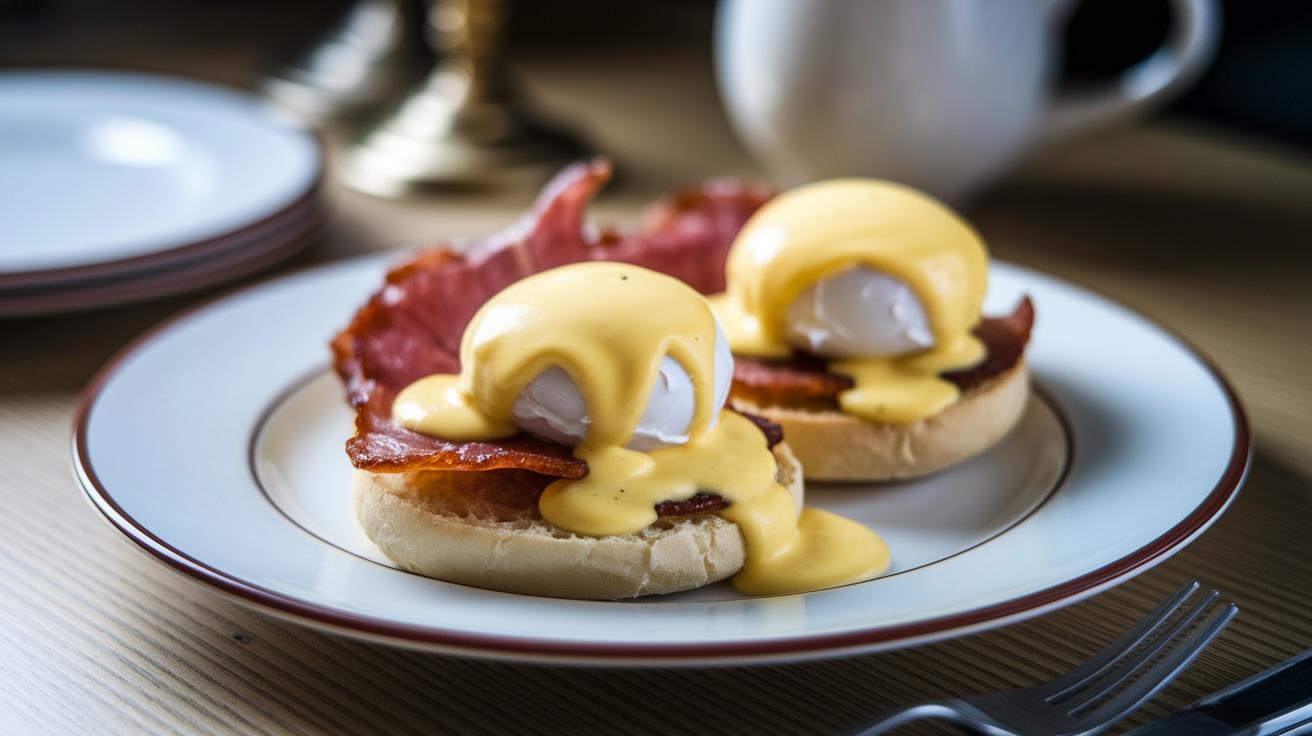
When making Eggs Benedict, it helps to know what adds to its calorie count. Each element brings its own energy, with hollandaise sauce standing out. A ¼ cup of hollandaise packs about 200 kcal and is the richest part of the dish. An English muffin gives you a good dose of carbs at around 130 kcal. Two poached eggs add about 144 kcal of protein and creaminess, while two slices of Canadian bacon or ham contribute roughly 100 kcal with a light, savory taste.
Below is a quick table that shows the calorie breakdown for each component:
| Component | Calories per Serving |
|---|---|
| English muffin | 130 kcal |
| Poached eggs (2) | 144 kcal |
| Canadian bacon/ham (2 slices) | 100 kcal |
| Hollandaise sauce (¼ cup) | 200 kcal |
Knowing these numbers lets you adjust portions or swap ingredients if you want a lighter meal. For instance, trying a mock hollandaise sauce can cut down on calories while keeping the dish bright and tasty. This breakdown is based on standard servings, so small differences in brands might change the numbers a bit. Enjoy your Eggs Benedict knowing exactly what every bite brings to the table.
Eggs Benedict Variations Calorie Comparison
Ham or Canadian Bacon Variant
This classic style gets a twist to help you manage your calories. It uses cured ham or Canadian bacon and normally comes in at 450 to 600 kcal per serving. The savory meat gives a rich flavor while keeping things moderate. Changing the portion size or slice thickness can shift the calorie count. Try this if you want a hearty bite without too many calories.
Smoked Salmon Version
Swap the ham for smoked salmon and you get about 500 to 650 kcal per serving. The salmon’s natural fats add a smooth, buttery feel and boost the energy count a bit. Plus, you get the omega-3 benefits. It’s a favorite choice if you like mixing up your morning routine.
Florentine Twist
In the Florentine version, the ham is replaced by fresh spinach and tomato. This change lightens the dish to roughly 350 to 500 kcal per serving. The vegetables add a bright, tangy crunch and extra nutrients without losing the dish’s classic charm. They pair nicely with the poached eggs.
Veggie Alternative
This option swaps meat for a vegetable base with a mock hollandaise sauce, cutting the calories down to around 300 to 400 kcal per serving. The lighter sauce and plant-based ingredients keep the flavor strong while lowering the calorie count. It’s a smart pick if you’re after a lower-calorie, wholesome brunch.
Nutritional Breakdown: Protein, Fat, Carbs in Eggs Benedict

A single serving of Eggs Benedict offers a well-rounded mix of nutrients that help keep your brunch both filling and energizing. Each serving gives you about 20 g of protein, mainly from the eggs and a bit from Canadian bacon or ham, which helps build and repair muscles.
You also get around 35 g of total fat per serving. About 15 g of this is saturated fat, thanks mostly to the rich, creamy hollandaise sauce that adds both smooth flavor and extra energy. Carbs come in at roughly 30 g per serving. This includes about 2 g of fiber to aid digestion and around 2 g of natural sugars for a slight touch of sweetness.
For those keeping an eye on daily intake, each serving has about 350 mg of cholesterol and 900 mg of sodium. These numbers can help you balance your meal choices so your brunch feels both hearty and measured.
Lower-Calorie Eggs Benedict Substitutions
Looking for a lighter spin on Eggs Benedict? A few smart swaps can cut calories without sacrificing taste or satisfaction. These tweaks make it easy to enjoy a refreshing brunch that feels both nutritious and filling.
Try swapping the classic English muffin and Canadian bacon for a whole-grain muffin paired with turkey bacon. This change cuts about 50 kcal per serving. For a low-carb boost, replace the muffin with a crisp lettuce wrap or a grilled portobello mushroom. This alternative brings the dish down to roughly 200 kcal while adding a burst of fresh flavor.
The rich hollandaise sauce is a big calorie culprit. Switching to a mock hollandaise made with Greek yogurt trims around 100 kcal, while still giving you that creamy texture. If you want to go even lighter, skip the sauce altogether. That version comes in at about 250-300 kcal per serving, letting the protein and veggies truly shine.
Another clever idea is to use an egg-white "muffin" substitute in place of a whole egg. This swap brings the calories for that part of the dish down to around 180 kcal.
- Whole-grain muffin with turkey bacon – saves ~50 kcal
- Lettuce wrap or portobello mushroom base – yields ~200 kcal total
- Mock hollandaise (Greek yogurt blend) – cuts ~100 kcal
- Hollandaise-free presentation – approximately 250–300 kcal per serving
- Egg-white “muffin” substitute – around 180 kcal total
Each substitution is an easy way to enjoy a healthier version of Eggs Benedict without losing any of its charm.
Eggs Benedict at Home vs. Restaurant Calories

When it comes to choosing where to enjoy your Eggs Benedict, the calorie count can vary a lot. At Denny’s, you get about 630 calories per order. Perkins offers a slightly lighter option with around 580 calories. Many chain restaurants serve a version that has roughly 650 calories, thanks to set portions that give you less control.
Upscale bistros tend to serve a richer Eggs Benedict, ranging from 700 to 850 calories per plate. These extra calories come from denser sauces and larger servings with premium ingredients. In contrast, a standard homemade recipe typically hits around 550 calories per serving because you can adjust everything to make it a bit lighter.
Making it at home lets you fine-tune each element, from the sauce amount to choosing leaner meats. This way, you can enjoy your favorite dish while keeping an eye on your calorie intake.
Final Words
In the action, the post broke down a classic Eggs Benedict dish. It covered the calories in eggs benedict, ingredient impacts, and different variations. We explored the calorie breakdown of each component and offered simple swaps to lighten the meal. We also compared homemade recipes to restaurant versions. The clear details help you plan, experiment, and enjoy this brunch favorite with confidence. Happy cooking, and enjoy each bite as you make nutritious, stress-free weeknight dinners!
FAQ
Calories in eggs benedict with bacon
Eggs Benedict with bacon typically ranges around 500–700 calories. This total depends on portion sizes and the amount of bacon and hollandaise sauce used.
How many calories in eggs benedict with hollandaise sauce
Eggs Benedict with hollandaise sauce generally contains about 400–600 calories, with the sauce alone adding roughly 200 calories per serving.
How many calories in eggs benedict with ham and hollandaise sauce
Eggs Benedict with ham and hollandaise sauce usually totals roughly 450–600 calories, where the ham and the rich hollandaise each add to the overall calorie count.
2 eggs benedict calories
Two servings of Eggs Benedict can add up to about 900–1200 calories, depending on the portion sizes and the specific ingredients used.
How many calories in eggs benedict with salmon
Eggs Benedict with salmon typically ranges from 500–650 calories, with the salmon contributing extra richness and a higher protein profile.
Calories in eggs benedict on sourdough
Eggs Benedict on sourdough usually offers around 500–650 calories, as sourdough adds about 130 calories per serving along with the classic components.
Calories in eggs royale with hollandaise
Eggs Royale, which substitutes salmon for ham, usually contains about 500–650 calories per serving, reflecting the influence of both the protein and hollandaise sauce.
Hollandaise sauce calories
Hollandaise sauce contributes roughly 200 calories per ¼ cup serving, making it the largest individual calorie source in a typical Eggs Benedict dish.
Why are Eggs Benedict so high in calories?
Eggs Benedict are high in calories because of energy-dense ingredients like butter-based hollandaise sauce, processed meats, and an English muffin, which combine to create a rich, indulgent dish.
How many calories are in IHOP Eggs Benedict?
IHOP Eggs Benedict average about 580–630 calories per serving, mirroring standard restaurant recipes with similar ingredients and portion sizes.
Are Eggs Benedict healthy for you?
Eggs Benedict can be part of a balanced diet when enjoyed in moderation. They provide protein and nutrients, but their high fat and calorie content suggest consuming them occasionally.
How many calories are in 2 poached eggs and 1 toast?
Two poached eggs and one toast generally add up to about 250–300 calories, with eggs contributing roughly 144 calories and toast around 130 calories.