
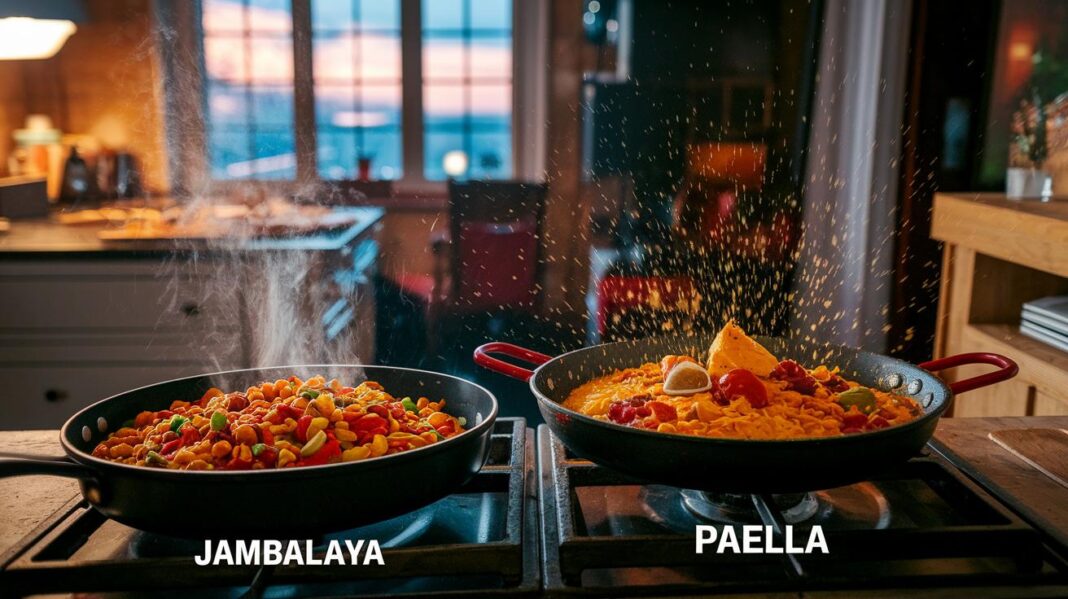

Ever curious which dish packs a bigger punch? Let’s dive into two famous rice dishes. Jambalaya comes from Creole kitchens and mixes bold spices with a mix of meats and other tasty ingredients. On the other hand, paella hails from Spain and is known for its delicate saffron flavor and refined style.
Jambalaya bursts with hearty flavors, while paella charms with a light touch of spice and tradition. Which one your taste buds prefer is up to you.
Comparing Jambalaya vs Paella: Origins, Ingredients & Cooking Methods
Jambalaya is a hearty one-pot meal that mixes rice, vegetables, and meat into a comforting dish. It comes from French Creole cuisine and usually includes chicken, smoked sausage, and shrimp. Bold spices like cayenne pepper and Creole seasonings give it a warm, spicy kick.
Paella, on the other hand, comes from Valencia in Spain. This dish also brings together rice, vegetables, and protein, often seafood, chicken, or even rabbit. Its delicate flavor comes from a touch of saffron and a hint of smoked paprika, making the meal light and aromatic.
Here are some simple ways to see the differences:
- Rice type: Paella uses short-grain rice, while jambalaya works with a more flexible rice choice.
- Main protein: Jambalaya is packed with smoked sausage, chicken, and shrimp, whereas paella leans more on seafood and sometimes poultry.
- Signature spice: The heat in jambalaya comes from cayenne pepper; paella is defined by the soft aroma of saffron.
- Cooking style: Jambalaya simmers in a heavy pot to blend its flavors, and paella is cooked in a wide, shallow pan without stirring to create a delicious crust.
- Cultural roots: Jambalaya shows off French Creole influences, while paella is deeply tied to Spanish traditions.
Both dishes offer a complete meal by combining rice, protein, and vegetables in one pot. Whether you’re in the mood for the bolder taste of jambalaya or the subtle charm of paella, you’ll enjoy a satisfying dish with every bite.
Cultural Roots of Jambalaya and Paella: Louisiana to Valencia
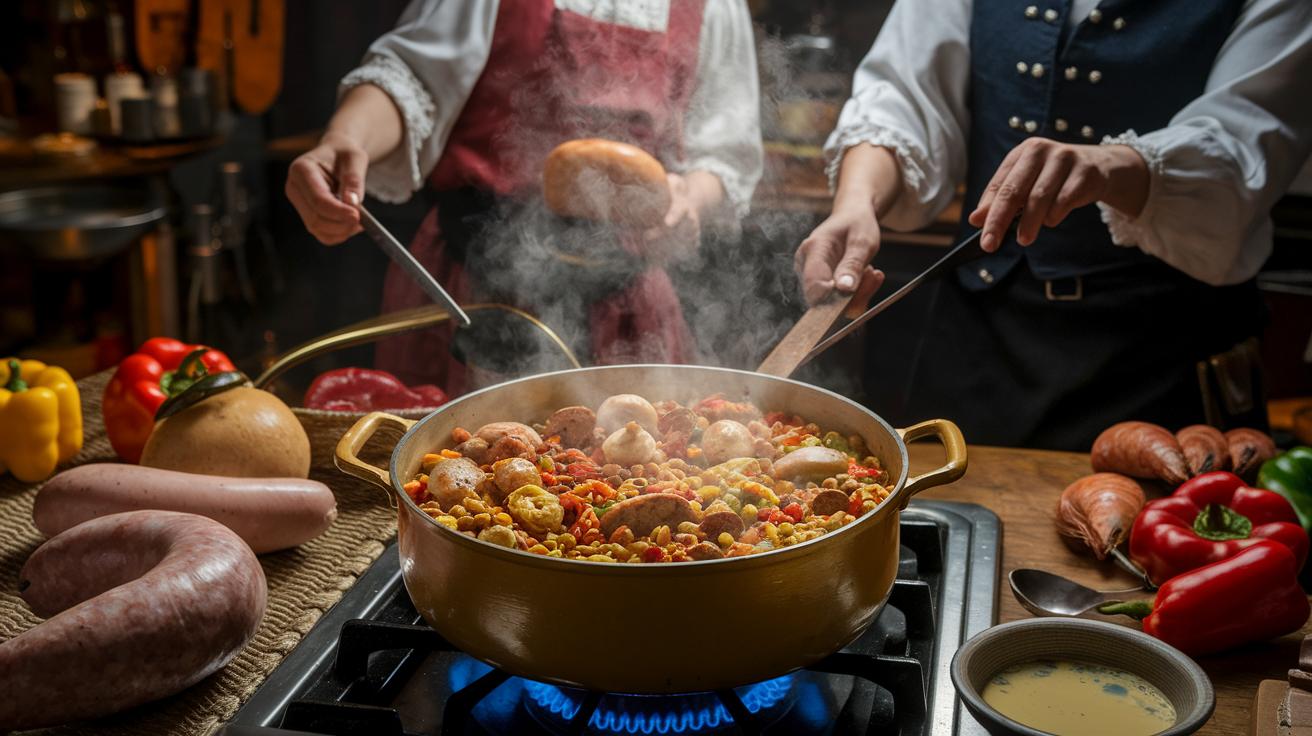
In 18th century Louisiana, French, Spanish, and West African influences came together to create jambalaya. Creole and Cajun cooks mixed local favorites like smoked sausage, chicken, shrimp, and fresh vegetables into a filling rice dish. They chose each spice and protein based on what they had on hand. A small dice of sweet orange bell pepper even added a burst of brightness.
In medieval Valencia, paella began in open-air kitchens tucked near thriving rice fields. Local chefs relied on the region’s special short-grain rice and a pinch of saffron (a spice grown nearby through long trade traditions). They paired these with seafood, chicken, or rabbit along with roasted red peppers and olive oil to craft a dish that celebrates its coastal heritage.
Each dish reflects its own geography. Louisiana’s hearty mix and bold spices tell a story of a resourceful, inland culture, while Valencia’s lighter, aromatic paella shows off the sunny, coastal charm.
Key Ingredient Breakdown in Jambalaya vs Paella
Jambalaya and paella both mix rice, veggies, proteins, and spices to create their signature tastes. Jambalaya stars chicken, smoked sausage, and shrimp with diced vegetables and a touch of cayenne. Paella uses short-grain rice along with a mix of seafood and meat, lifted by the warmth of saffron and the sweetness of roasted red peppers.
| Ingredient Category | Jambalaya | Paella |
|---|---|---|
| Rice Type | Standard long/medium grain rice | Short-grain rice |
| Primary Protein | Smoked sausage and chicken | Chicken or rabbit |
| Secondary Protein | Shrimp | Seafood medley (mussels, clams, shrimp) |
| Key Vegetable | Diced bell peppers, celery, and onion | Roasted red peppers |
| Signature Spice | Cayenne seasoning | Saffron |
In jambalaya, the hearty blend of proteins and vegetables creates a robust dish with a warming, spicy kick. Paella, on the other hand, lets the short-grain rice soak up a saffron-infused broth while the seafood and roasted vegetables add a light yet rich flavor that makes each bite special.
jambalaya vs paella: Bold Flavor Showdown
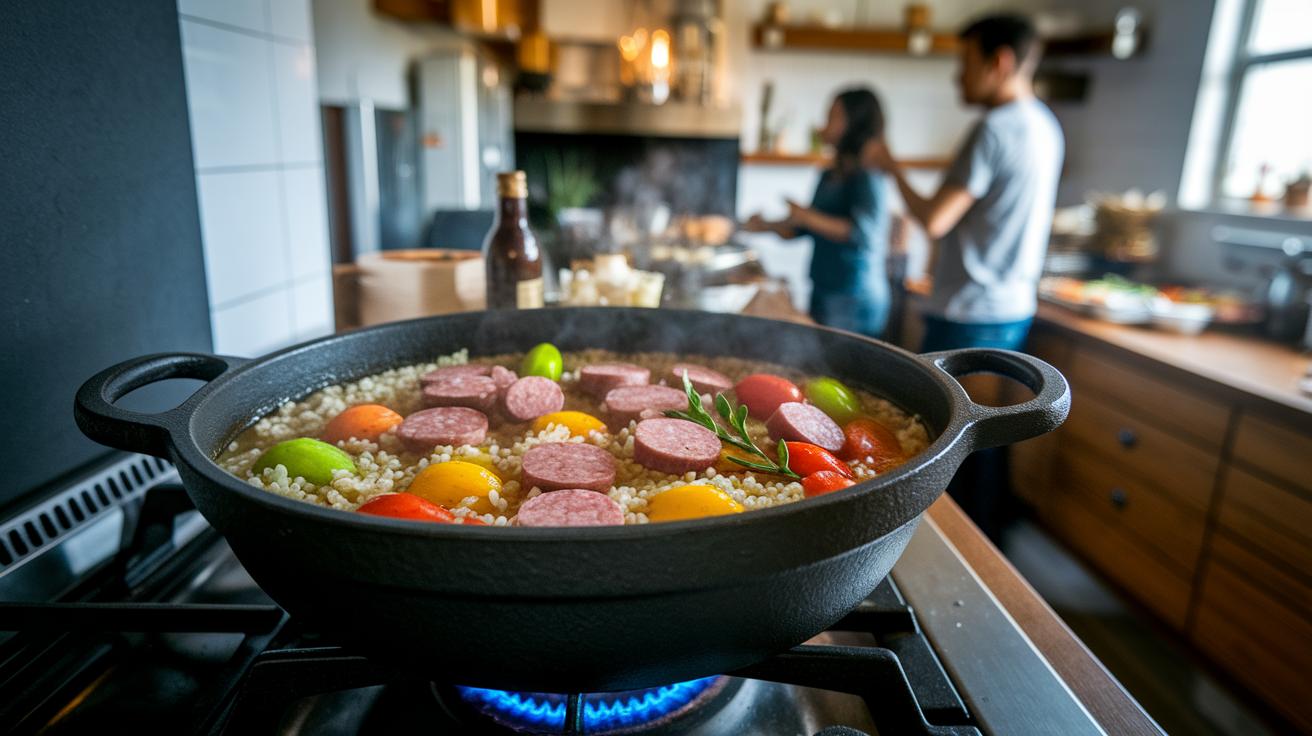
The pan you choose truly changes your dish. A deep, heavy pot keeps heat even and locks in moisture so bold flavors meld, while a wide, shallow pan helps food cook evenly and creates a tasty crispy bottom. In other words, using the right pan is key to perfect rice every time.
For jambalaya, start with a heavy cast-iron pot. First, sauté your veggies and sausage until they soften and bring out their flavors. Next, stir in 2 cups of broth and let the rice simmer for 20 minutes. If it needs more liquid, add 1/2 cup extra broth before mixing in the chicken and shrimp. Then, cover the pot and cook for another 10 minutes until everything is heated through and the rice is tender. For more one-skillet ideas, check out one skillet meals.
On the other hand, paella does best in a broad, shallow pan made for it. Heat olive oil to gently warm the rice grains. Then add saffron-infused stock and cook uncovered. This lets the liquid absorb and helps form the signature crispy layer (socarrat) at the bottom.
Flavor Profiles in Jambalaya vs Paella: Cajun Heat vs Saffron
Jambalaya delivers a bold, spicy kick with cayenne and Creole seasoning. It mixes smoked sausage, chicken, and shrimp for a warm, rich taste.
Paella, on the other hand, offers a lighter aroma with a hint of saffron and a touch of smoked paprika. Fresh seafood and chicken work together to create a gentle and balanced flavor.
Each dish uses its spice blend to highlight its proteins. Jambalaya ramps up the robust meat flavors, while paella brightens the lighter seafood and chicken.
Serving Styles & Regional Variations of Jambalaya and Paella
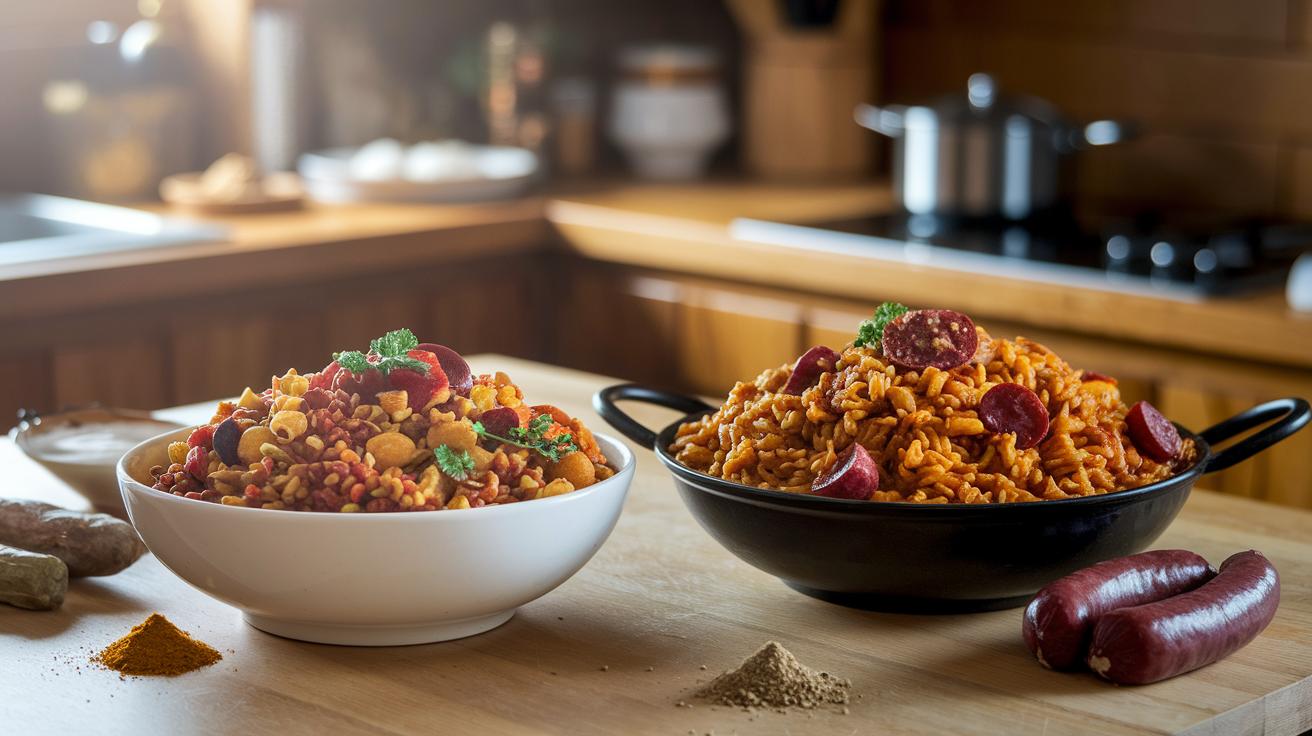
Jambalaya comes in two basic styles that show off its local flavor. Creole jambalaya uses tomatoes that bring a bright, tangy note to the dish. Cajun jambalaya, often called brown jambalaya, gets its deep, savory taste from a dark roux. Sausage like andouille or tasso adds a unique kick. Picture stirring in spicy andouille into a simmering tomato mix for a hint of smoky heat in every spoonful.
Paella offers several variations to match different tastes. Valenciana paella features meats such as chicken or rabbit for a hearty flavor. The Mariscos version skips the meat and focuses on seafood like mussels, clams, and shrimp. There is also a mixed paella that combines both meat and seafood for a rich, layered taste. Many chefs say that blending flavors from land and sea makes each serving extra satisfying.
Many home cooks tailor these dishes with what they have on hand. You can change the proteins, vegetables, or spices to put your own twist on these classic recipes.
Nutrition Comparison: Hearty Jambalaya vs Lighter Paella
Jambalaya bursts with bold flavors and hearty ingredients. It uses smoked sausage and a dark roux (a cooked mix of fat and flour) to add extra calories and protein. Chicken, shrimp, and sausage come together to create a filling meal that warms you from within.
Paella takes a lighter approach. It features olive oil as its main fat and offers a mix of seafood with lean proteins like chicken or rabbit. Fresh vegetables and a touch of saffron keep it flavorful and nutrient-rich without packing too many calories.
You can easily tweak each dish. Try swapping smoked sausage for turkey sausage in jambalaya, or add more vegetables to either dish to lower the fat and boost fiber.
Final Words
In the action of comparing these two classic dishes, we saw how jambalaya’s bold Creole heat contrasts with the aromatic, saffron-infused flavors of paella. The article broke down their origins, core ingredients, and cooking techniques, making each step clear and simple.
We reviewed key differences and similarities through straightforward lists and detailed explanations. Each recipe brings its own charm to the one-pot rice meal category, making the jambalaya vs paella comparison both enlightening and delicious. Enjoy trying them both and adding a bit of global flair to your dinner table.
FAQ
Frequently Asked Questions
Q: What distinguishes jambalaya, paella, and gumbo?
A: The comparison of jambalaya, paella, and gumbo shows each dish’s unique roots and flavors. Jambalaya features bold Cajun spices, paella highlights saffron and Mediterranean ingredients, and gumbo offers a thick, stew-like texture.
Q: What are the taste differences between jambalaya and paella?
A: The taste comparison indicates that jambalaya brings a spicy, warm flavor with cayenne heat, while paella delivers a subtle, aromatic profile with saffron and a mix of seafood or meat enhancing its flavor.
Q: How do jambalaya and paella differ when they include seafood?
A: The seafood versions show that jambalaya pairs shrimp with spicy sausage in a hearty mix, whereas paella emphasizes a variety of seafood like mussels and clams, all enhanced by the delicate infusion of saffron.
Q: What makes a great jambalaya or paella recipe?
A: The recipe quality is defined by fresh ingredients and precise spices. A proper jambalaya uses robust Creole seasoning with simmered rice, while an ideal paella develops a distinct socarrat in a wide pan with saffron-infused stock.
Q: How does gumbo compare to jambalaya?
A: The gumbo versus jambalaya comparison reveals that gumbo is a thick stew typically served over rice, while jambalaya is a one-pot rice dish where all ingredients cook together for an integrated flavor.
Q: How does paella compare to risotto?
A: The comparison shows that paella cooks uncovered in a shallow pan to form a crispy bottom, whereas risotto is stirred steadily to release starch, creating a creamy, soft texture throughout.
Q: Which dish came first, jambalaya or paella?
A: The historical timeline shows paella originated in medieval Spain, while jambalaya developed later in Louisiana through Creole and Cajun influences, making paella the older dish.
Q: What dish is similar in style to paella?
A: The comparison reveals that a similar one-pot rice dish is jambalaya, which like paella mixes rice with proteins and vegetables, though its spices and cooking style reflect a distinct Louisiana influence.
Q: Why is paella less common as a dinner meal?
A: The description suggests paella is less common for dinner because its preparation is time-consuming and often reserved for special gatherings, making it a dish savored on occasions rather than everyday meals.
Q: Is jambalaya an American version of paella?
A: The explanation clarifies that jambalaya is not an American paella; it is a unique Louisiana dish born from Creole and Cajun traditions, with its own distinct flavors and ingredients separate from Spanish paella.