


Ever wondered if your go-to comfort food could get a fresh twist? This veggie zucchini lasagna takes the classic dish and makes it light and vibrant. We layer roasted zucchini with creamy béchamel (a smooth white sauce) and melty cheeses for a dish that’s both fun and satisfying.
Every bite gives you a gentle crunch followed by rich, comforting flavor. It’s a smart mix of healthy vibes and hearty taste. Ready to try five fun ways to enjoy zucchini lasagna? Let’s get started!
Complete Vegetarian Zucchini Lasagna Recipe
Total prep time: 20 minutes
Cook time: 30 minutes
Yield: 6–8 servings
This tasty layered dish is a fresh and hearty take on vegetarian lasagna. I love how the roasted zucchini, creamy béchamel, and melty cheeses come together to create a comforting meal any night of the week.
Ingredients:
- zucchini (chopped; use extra if you like more veggies)
- smoked mozzarella (sliced)
- ricotta (dolloped in layers)
- butter
- all-purpose flour
- milk
- marinara sauce
- Parmesan (make sure it is vegetarian-labeled because traditional versions may use calf rennet)
- olive oil
- salt
Steps:
- Preheat your oven to 375 F.
- Toss your chopped zucchini (and optional Japanese eggplant) with olive oil and a pinch of salt. Spread the vegetables on a baking sheet and roast until they are tender.
- To make the béchamel, melt butter in a small saucepan. Stir in the flour until it forms a smooth paste. Gradually add milk while whisking until the sauce is creamy and free of lumps.
- In a baking dish, start by spreading a thin layer of marinara sauce. Add a layer of the roasted vegetables, then spoon dollops of ricotta and place slices of smoked mozzarella on top.
- Repeat the layers until you build a hearty dish.
- Bake the layered dish in the oven until the cheese melts and the top turns lightly golden.
- Let the lasagna rest for 10 minutes before cutting into portions. This helps keep the layers neat on the plate.
Enjoy this Tuscan-style vegetable pasta bake that brings a warm and fresh twist to your dinner table.
Vegetarian Zucchini Lasagna Ingredient Breakdown
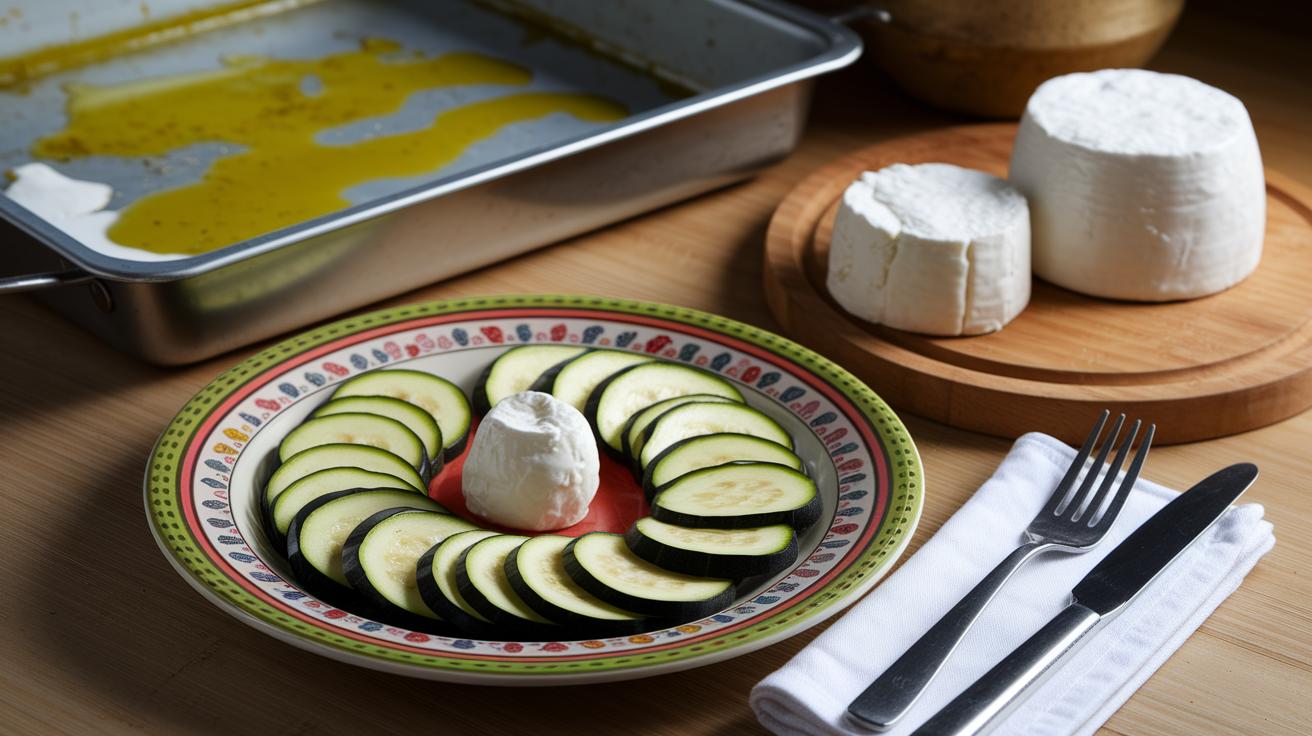
Fresh vegetables form the heart of this dish. We use sliced zucchini and, if you like, a bit of Japanese eggplant to stand in for traditional noodles. Toss them in 2 tbsp olive oil and a pinch of salt, then roast until they are tender and slightly sweet. This simple step gives you a light, gluten-free base that holds its shape for layering.
Cheeses bring a creamy richness and a burst of flavor. For the roll-up version, the recipe calls for 30 oz ricotta, which gives a smooth, mild texture that mixes well with the other cheeses. Smoked mozzarella adds a deep, savory note, while vegetarian Parmesan finishes the layers with a nutty kick. You can also try dairy-free cheese if you prefer.
The sauces pull everything together. A homemade marinara offers a fresh, tangy flavor, though a good quality store-bought one works fine too. The béchamel sauce is made with butter, flour, and milk (or a dairy-free alternative) to create a smooth, binding layer. If you like a thicker sauce, simply add a bit more flour or milk to get just the right consistency.
Finally, simple seasonings like garlic and herbs such as basil and oregano round out this low-carb, summer veggie casserole perfectly.
Advanced Techniques for Perfecting Vegetarian Zucchini Lasagna
Perfect Vegetable Roasting
Preheat your oven to 425°F. Use a rimmed baking sheet and spread the zucchini strips in one layer. Place the tray on the center rack so the heat cooks them evenly. Roast for 10 minutes, then flip the zucchini halfway through. This gives each piece a lovely golden finish and brings out a rich, deep flavor with a slight char.
Managing Moisture for a Firm Lasagna
Evenly sprinkle salt over the zucchini strips and set them on a cooling rack for 10–15 minutes. This step draws out extra moisture. After resting, gently pat the slices dry with paper towels. Doing this helps your lasagna hold its shape and avoids a watery texture.
Béchamel Consistency Adjustments
Start your béchamel by melting butter and stirring in an equal amount of flour to form a smooth roux. Gradually whisk in milk (or a dairy-free option) over moderate heat. If the sauce feels too thick, add a little more milk slowly. If it’s too thin, add a bit more flour while whisking steadily. A smooth sauce binds the layers together and adds a rich taste to every bite.
Layering and Resting for Clean Slices
Layer the roasted vegetables, béchamel, and cheeses evenly in your baking dish. Bake at 375°F for 25–30 minutes. Once out of the oven, allow the lasagna to rest for 10 minutes. This resting time helps the layers settle, making it easier to cut neat, clean slices every time.
Tips for Texture and Flavor in Vegetarian Zucchini Lasagna

- Try adding fresh herbs to your marinara. Stir in 1 tablespoon basil and 1 teaspoon thyme for a bright lift.
- Mix up your cheeses for extra creaminess. Blend 1/2 cup goat cheese with 1/2 cup ricotta, or swap smoked mozzarella for fontina, to create a unique taste.
- Roast vegetables to add a subtle smokiness. Roast 1 sliced red pepper at 425 F for 15 minutes, then layer it with zucchini for a bold, sweet twist.
- Add a nutty crunch on top. Toast 1/4 cup pine nuts over medium heat for 3 minutes until lightly browned, then sprinkle them on your lasagna.
- Brighten the dish with a touch of citrus. Grate 1 teaspoon lemon zest into your sauce or sprinkle it on top before serving to boost the flavors.
Nutritional Information for Vegetarian Zucchini Lasagna
We estimated these values using data from the USDA Food Composition Database. This gluten-free, low-carb dish fits well into a balanced diet by giving you a steady mix of calories, fats, protein, and carbs. Every serving offers important nutrients that help make your meal both tasty and nourishing.
If you're looking to cut back on sodium, try using less salt or switching to a lower-sodium marinara sauce. You might also choose a lower-fat cheese to reduce fat without losing flavor. Below is a table that shows the per-serving values so you know exactly what you’re enjoying.
| Serving Size | Calories | Total Fat | Protein | Carbohydrates |
|---|---|---|---|---|
| 1 Slice (approx. 1/8 of dish) | 220 | 8g | 12g | 25g |
Variations and Substitutions for Vegetarian Zucchini Lasagna

This dish invites you to experiment with simple twists that match your taste or dietary needs. You can try a dairy-free version or add extra veggies to create a hearty, layered meal. Here are some ideas to mix things up:
- Eggplant layer: Add thin slices of roasted eggplant along with the zucchini. It brings a smoky taste and a richer texture.
- Spinach/ricotta spirals: Roll up baby spinach with a dollop of ricotta inside the zucchini strips. This gives a burst of fresh, vibrant flavor.
- Tomato-free white sauce version: Replace the marinara with a creamy white sauce made with garlic and dairy-free milk. This light sauce is great if you are avoiding tomatoes.
- Vegan cheese swap: Use your favorite plant-based cheese instead of smoked mozzarella. This keeps the dish vegan while still offering a melty, satisfying texture.
- Herb-infused marinara: Stir extra basil, oregano, and a pinch of thyme into your marinara for a lively, aromatic sauce.
- Spicy arrabbiata twist: Add red pepper flakes into the marinara. The gentle heat adds an extra kick to each bite.
Storage, Reheating, and Serving Suggestions for Vegetarian Zucchini Lasagna
After you take the lasagna out of the oven, let it cool on the counter for 10 minutes so the layers settle. When it’s cool enough, place any leftovers into an airtight container and store them in the fridge for up to 3 days.
If you want to save some for later, you can freeze the lasagna for up to 1 month. Just be sure it cools completely before sealing it in the container.
When you're ready to eat the saved lasagna, preheat your oven to 350°F. Cover the dish and warm it for about 15 minutes. This gentle reheat keeps the moisture in and the flavors balanced, so it tastes as good as when it was freshly baked.
Serving tips:
- Enjoy a warm slice with a crisp green salad for a fresh contrast.
- Try substituting regular bread with garlic bread for an extra zing.
- Top each piece with fresh basil to add color and a burst of flavor.
For an easy reminder in the future, sign up with your email to save this recipe for family-friendly meals.
Final Words
In the action, we covered a hearty vegetarian zucchini lasagna recipe with all the essentials. The post explained how to prep in 20 minutes, bake in 30 minutes, and serve 6–8 delicious portions. We highlighted key ingredients like zucchini, smoked mozzarella, ricotta, béchamel components, marinara, and Parmesan. We also broke down the process into six clear steps, from roasting the veggies to letting the dish rest.
Enjoy making your vegetarian zucchini lasagna and savor every stress-free bite!
FAQ
What variations exist for vegetarian zucchini lasagna recipes?
The vegetarian zucchini lasagna recipe offers many options, such as white sauce, cottage cheese, or no ricotta. Some even use thin courgette slices instead of pasta for a lighter, low-carb version.
Do you cook zucchini before putting in lasagna?
Cooking zucchini before layering helps reduce extra moisture. Many cooks roast or salt the slices briefly to prevent sogginess in the finished dish.
What is a good substitute for meat in lasagna?
Vegetables like mushrooms, eggplant, or roasted bell peppers work well as meat substitutes. They add a hearty texture and rich flavor without relying on meat.
What are common mistakes in veggie lasagna recipes?
Common mistakes include not draining or salting zucchini properly, leading to a soggy texture, and uneven layering that can affect both flavor and consistency.
What kind of sauce is best for zucchini lasagna?
A balanced sauce such as a creamy white sauce or hearty marinara works best. The white sauce keeps the dish light, while marinara adds a tangy, robust flavor.