

Ever wonder if you can enjoy paella without using traditional rice? In this post, I show you smart ways to swap in different grains that still deliver a classic flavor and satisfying crunch.
You can try alternatives like Calasparra, Arborio, or even quinoa. They blend well with your stock and help you create that crispy bottom and lively taste you love. Give these twists a try and enjoy a fresh spin on a timeless dish.
Best Paella Rice Substitute: Top Alternative Grains Overview
If you can’t find traditional paella rice, you can still enjoy that delicious flavor and crunchy socarrat with a few smart substitutions. Local stores might only offer other grains that soak up liquid well without turning mushy.
- Calasparra: This grain is very similar to Bomba rice in size, shape, and color. It creates a nice, defined socarrat, though it might cost a bit more.
- Arborio: Common in the U.S., Arborio cooks quickly and gives the dish a creamier texture. Just add an extra 1/2 cup of water to balance it out.
- Calrose: A medium-grain option that works well in paella. When using Calrose, reduce your stock to 3 3/4 cups. Its texture is a little different from traditional rice.
- Basmati: This long-grain rice has a light, aromatic taste that is unique. It won’t form the classic crispy bottom, but it adds a different flavor twist.
- Quinoa: A gluten-free choice that cooks in 15 minutes and boosts protein. Its nutty flavor shifts the dish away from the classic Spanish taste.
These grains are easy to find at your local market, letting you prepare a tasty paella even when Bomba rice isn’t available.
Paella Rice Substitute: Tasty Grain Twists
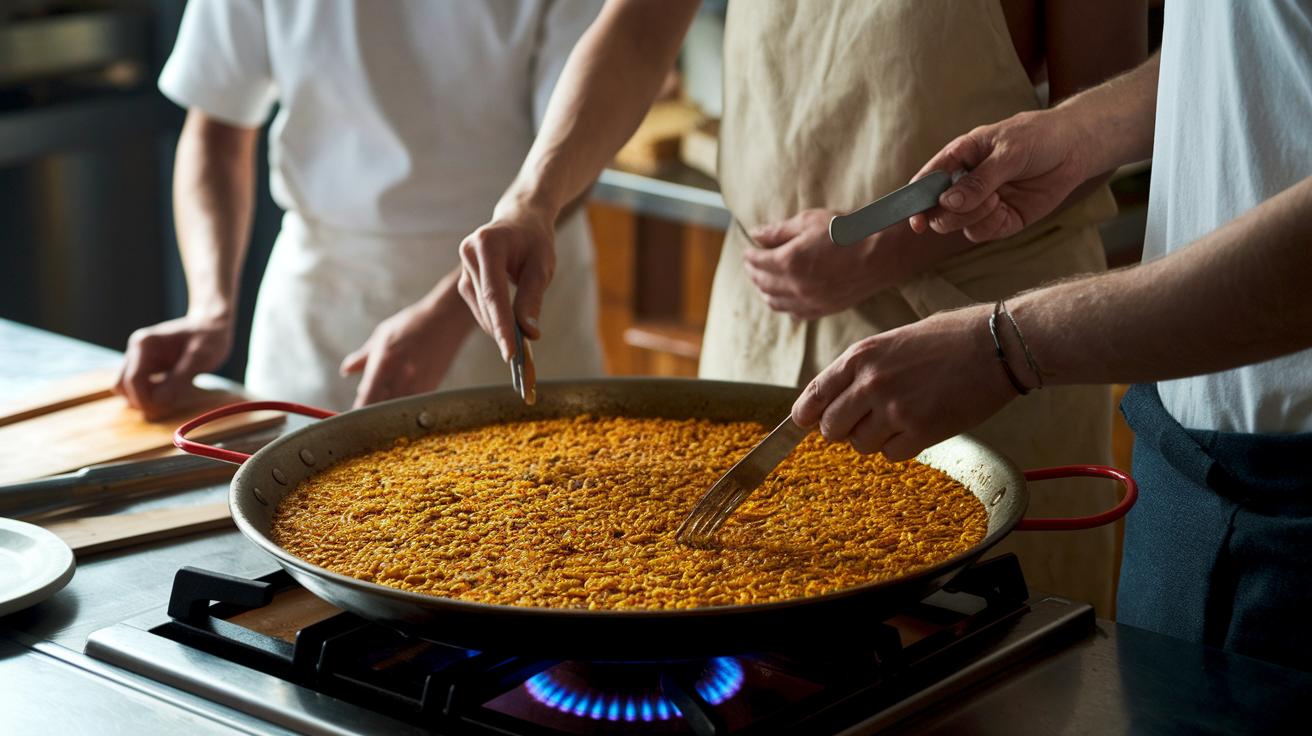
When choosing a substitute for paella rice, go for a grain that soaks up stock evenly without turning too soft. You want the grains to capture the liquid while still forming that prized crispy bottom (socarrat). Short grains usually release more starch for a crisp base, while medium grains give you a slightly different feel. A wide, shallow pan, like a 12×2″ skillet or a 30 cm paella pan, ensures even heat and uniform cooking.
When you swap grains, remember to adjust the liquid too. For example, risotto rice needs an extra 1/2 cup of water, and Calrose requires 3¾ cups of stock to keep the balance right. Avoid long-grain varieties since they don’t release enough starch, which can leave your paella missing its classic flavor and texture. Here are some key points to consider:
- Absorption: The grain should soak up stock well without falling apart.
- Starch release: It must help build that signature socarrat.
- Cook time: It should cook evenly in about the same time as traditional paella rice.
- Pan fit: The grain should work nicely in a wide, shallow pan.
- Flavor retention: It needs to hold on to the traditional Spanish taste.
Leading Non-Bomba Cereal Options for Paella
Below are five great alternatives to Bomba rice, each with its own flavor and tip for that perfect crispy bottom, known as socarrat.
Calasparra
This rice has a familiar taste and a firm texture that crisps nicely. For a crunchy finish, simmer it uncovered for the last minute.
Arborio
Arborio creates a creamier paella. Add ½ cup extra water and stir gently at first, then let it sit so the bottom develops a light crunch.
Calrose
A medium-grain option, Calrose works best with 3¾ cups of stock to mimic Bomba’s absorbency. This adjustment helps form a nice socarrat without overcooking the rice.
Basmati
Basmati offers a long-grain aroma and a lighter texture. A gentle, low-heat simmer helps build a modest, aromatic crust without overpowering its natural flavor.
Quinoa
A gluten-free choice with a nutty taste and extra protein, quinoa cooks in 15 minutes. Use 1⅔ cups of stock and watch it closely to prevent mushiness while still getting a slight crunch.
| Grain | Cook Time | Stock Ratio | Socarrat Potential |
|---|---|---|---|
| Calasparra | 18 min | Standard | High |
| Arborio | 16 min | +½ cup water | Moderate |
| Calrose | 17 min | 3¾ cups stock | Moderate |
| Basmati | 20 min | Slightly less | Low |
| Quinoa | 15 min | 1⅔ cups stock | Low |
Cooking Techniques for Substitute Grains in Paella
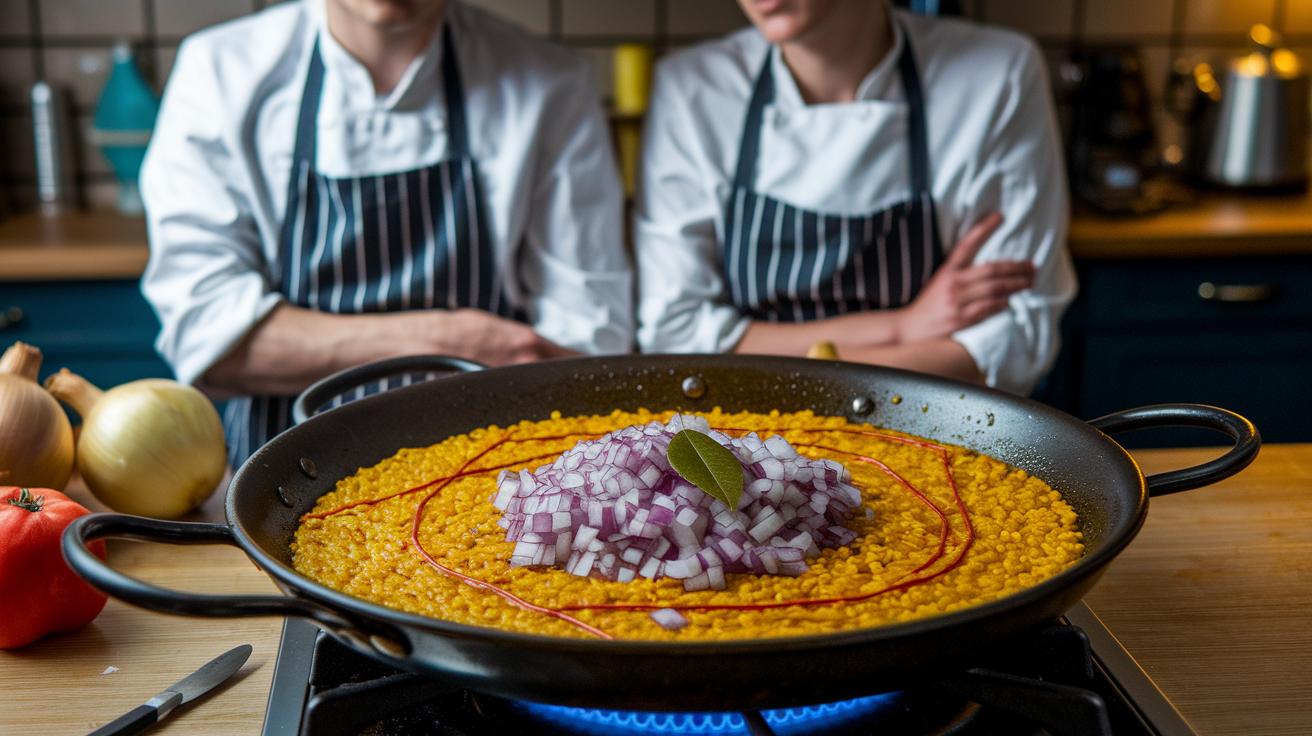
To get that perfect crispy socarrat and well-cooked grains, follow these steps. Start by finely dicing onions, bell peppers, and garlic. Gather your tomato (or canned crushed tomato), paprika, saffron, and a bay leaf.
- Heat 2 tablespoons olive oil in a wide, shallow pan (like a paella pan or a 12×2-inch skillet). Sauté the diced vegetables on medium heat until they become soft.
- Add your tomato and spice mix. Let it simmer for 3–4 minutes so the flavors blend without overcooking.
- Stir in your chosen grain along with its specific liquid. For example, if you use Arborio, add an extra ½ cup of water. If you choose Calrose, mix in 3¾ cups of stock.
- Allow the mixture to simmer undisturbed so that a golden crispy layer (socarrat) forms on the bottom. Here are some guide times:
- Calasparra: 18 minutes
- Arborio: 16 minutes
- Quinoa: 15 minutes
- Basmati: 20 minutes
- Calrose: 17 minutes
- Once the cooking time is complete, remove the pan from the heat. Let it rest for 5 minutes so the flavors settle nicely.
Finish by garnishing with fresh parsley and lemon wedges. The bright lemon cuts through the rich flavors, adding a fresh, tangy touch.
Comparative Table: Substitute Grains vs Traditional Bomba Rice
This guide helps you compare different grains you can use for paella. Each option is shown with its liquid absorption, the stock needed, cost per pound, and texture details. Bomba rice soaks up 3× its weight and gives you that classic crispy bottom, but Calasparra does almost as well at a lower price. Arborio delivers a creamier bite though it needs an extra ½ cup water, Calrose consistently works with 3¾ cups of stock, and quinoa adds a nutty, gluten-free twist with 1.5× absorption. Use this table to find the grain that fits your budget and cooking style, and feel free to experiment to get the perfect paella every time.
| Grain Type | Absorption Ratio | Stock Needed | Price/lb | Texture Notes |
|---|---|---|---|---|
| Bomba | 3× | Standard | $5 | Top socarrat |
| Calasparra | 2.9× | Standard | $4 | Near-identical |
| Arborio | 2.5× | +½ cup water | $3 | Creamier texture |
| Calrose | 2.8× | 3¾ cups stock | $2 | Widely available |
| Quinoa | 1.5× | 1⅔ cups stock | $4.50 | Gluten-free, nutty |
Dietary and Flavor Variations with Alternative Grains
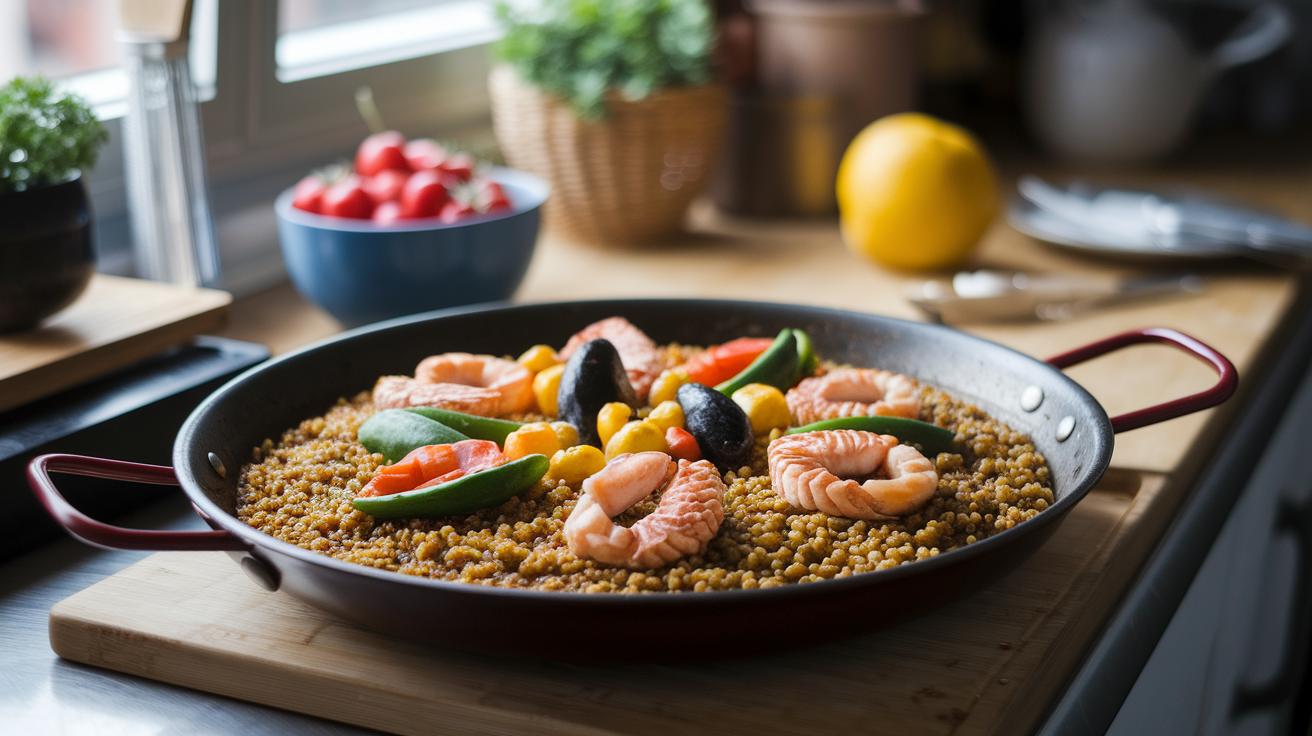
Looking for a fresh twist on paella? Changing the grain can give your dish a new feel while matching different dietary needs. When you swap grains, you can change the texture, boost nutrition, and even adjust cooking time. These changes can turn your paella into a protein-rich, gluten-free meal or a whole-grain dish with a nice aroma.
- Gluten-free option: Use quinoa to add protein and keep the dish gluten-free.
- Vegetarian twist: Leave out seafood and add more veggies with extra chicken stock for richness.
- Whole-grain upgrade: Stir in brown rice for more nutrition; remember, it needs 5 extra minutes to cook.
- Quick-cook choice: Try bulgur or couscous for a chewy texture that cooks fast.
- Aromatic touch: Use basmati rice for a subtle flavor and a lower glycemic index.
- Tomato fix: Choose canned crushed tomatoes when fresh ones aren’t at their best.
Play around with these ideas to create a paella that fits your taste and dietary goals.
Final Words
In the action, we explored top alternative grains that perform nearly as well as traditional Bomba rice. We broke down each option with notes on texture, stock adjustments, and cooking techniques. The post offered clear comparisons, simple tips, and a look at dietary and flavor variations so you can try something new with ease.
These insights open the door to more versatile cooking and a stress-free mealtime using a dependable paella rice substitute.
FAQ
What is Bomba rice and why is it essential for paella?
Bomba rice is a short-grain rice known for soaking up three times its volume and keeping its shape, which helps create the signature socarrat in paella.
What are traditional and Mexican paella rice substitute options?
Traditional substitutes like Calasparra and options such as Arborio and medium-grain Calrose are used for their ability to absorb stock well without turning mushy, similar to Mexican paella recipes.
Where can I buy paella rice like Bomba rice near me?
Bomba rice is available at specialty grocery stores or Spanish markets and many online retailers offer delivery options if you search for paella rice.
Can Arborio rice be used for paella and is it the same as Bomba rice?
Arborio rice is a viable substitute for paella but differs from Bomba rice by producing a creamier texture and often requires a bit extra water during cooking.
Can I use regular white rice or jasmine rice for paella?
Regular white rice and jasmine rice do not offer the necessary absorption qualities for paella, leading to an uneven texture and a less authentic socarrat.
Is basmati rice a good option for paella?
Basmati rice adds a distinct aroma but falls short in texture and absorbency, making it a less ideal choice for achieving the traditional paella finish.